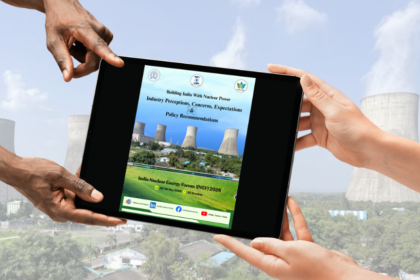

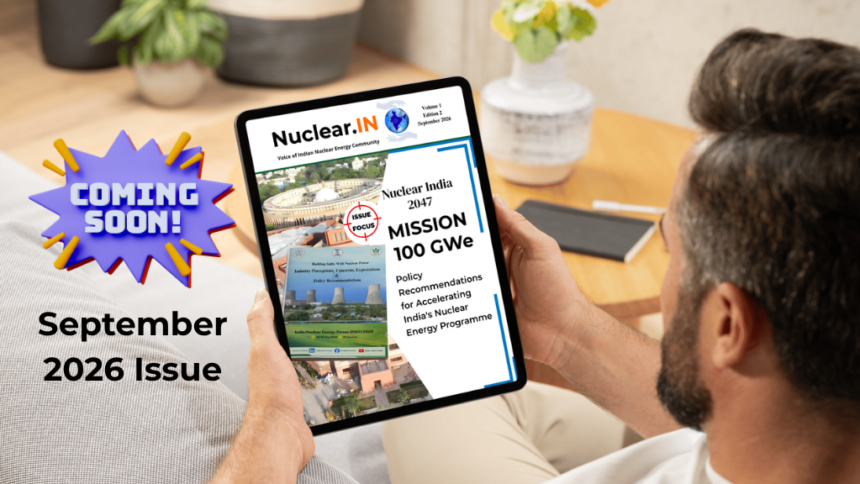
India’s nuclear energy sector is entering a decisive period. The national target of achieving 100 GWe of nuclear power capacity by 2047 has moved nuclear energy to the center of discussions on energy security, economic growth, and clean energy transition. As the country prepares for large-scale expansion, attention is increasingly focused on the policies, institutions, investments, and capabilities needed to make this vision a reality. The September 2026 issue of Nuclear.IN Magazine is dedicated to Mission 100 GWe. This special issue captures the views of India’s nuclear community on what is required to accelerate growth and build a globally competitive nuclear ecosystem.
Across the sector, there is strong confidence in India’s nuclear capabilities. The country has developed expertise in reactor technology, engineering, manufacturing, operations, fuel cycle management, and research. Moreover, decades of experience have created a strong foundation for future expansion. However, stakeholders also recognize that achieving the 2047 target will require faster execution and greater collaboration.
At the same time, industry leaders have identified several areas that need policy attention. These include licensing and siting regulations, project economics, financing mechanisms, reactor technology frameworks, fuel security, supply chain readiness, workforce development, collaborative research, and public awareness. While progress has been made in many areas, stakeholders believe further reforms can unlock the sector’s full potential.
Therefore, this issue presents industry perspectives, concerns, expectations, and recommendations across ten strategic themes. The objective is not only to identify challenges but also to highlight practical solutions. In addition, the issue seeks to encourage dialogue between policymakers, regulators, developers, investors, technology providers, and the wider nuclear community.
A recurring theme throughout the discussions is the need for long-term policy certainty. Stakeholders are looking for a stable and investment-friendly environment that can support large-scale deployment. Furthermore, they expect stronger coordination between government agencies, regulators, state governments, industry, and research institutions.
Looking ahead, many participants see opportunities extending beyond India’s domestic market. They believe the country can emerge as a global nuclear technology partner by leveraging its indigenous capabilities, manufacturing strength, and engineering expertise. Consequently, Mission 100 GWe is viewed not only as an energy programme but also as an opportunity to strengthen India’s position in the global nuclear industry.
The recommendations featured in this issue reflect the collective thinking of India’s nuclear community. Together, they provide a roadmap for building the policies, institutions, and partnerships needed to achieve the nation’s nuclear ambitions.
As India advances toward 2047, Mission 100 GWe represents more than a capacity target. It represents a national commitment to energy security, technological leadership, industrial growth, and a cleaner energy future.
September 2026 Theme:
Mission 100 GWe – Industry Perspectives, Concerns, Expectations & Policy Recommendations