
Nuclear Power Financing will play a crucial role in India’s plan to expand nuclear energy capacity. However, new projects require large upfront investments and long development timelines. Therefore, stakeholders at INEF 2026 proposed several measures to improve project viability, reduce risks, and attract long-term investment. The recommendations focus on liability clarity, emergency preparedness funding, and targeted financial support for early projects.
Reducing Risks Through Clear Responsibilities
Stakeholders noted that uncertainty around nuclear liability can increase project costs. As a result, suppliers often seek higher indemnities and add risk premiums to contracts.
To address this issue, they recommended clarifying that all nuclear-damage claims should be channelled through the SHANTI framework and the operator–supplier indemnity mechanism. This would prevent parallel legal actions against suppliers, except where contractual rights of recourse apply. Consequently, suppliers would face lower uncertainty and projects could become more cost-effective.
Stakeholders also highlighted the importance of emergency preparedness. They proposed that operators should remain responsible for on-site emergency plans, while district authorities should own and manage off-site emergency plans in coordination with AERB and state disaster management agencies.
In addition, operators could contribute to a dedicated District Off-site Emergency Fund through a statutory levy. Emergency preparedness costs could then be recovered as approved operating expenses under the tariff framework.
Nuclear Power Financing : Viability Gap Funding for Early Projects
Another major concern is the high capital cost of initial nuclear power projects. Early projects often face higher costs because the domestic supply chain is still developing and industry experience is limited.
Therefore, stakeholders recommended extending Viability Gap Funding (VGF) support to the first phase of nuclear power deployment. Such support could help reduce financing costs and improve project affordability.
Rather than creating a separate nuclear funding scheme, stakeholders suggested allowing eligible projects to access existing government VGF and infrastructure-financing programmes. Support could be linked to certified construction milestones and gradually reduced as the sector matures.
They also recommended that the benefits of VGF should be passed on to consumers through lower tariffs. At the same time, the support should be limited to the first group of projects until a stronger domestic nuclear ecosystem and supply chain are established.
Nuclear Power Financing- Concern, Expectation, Recommendations
| Policy Area | Concern | Expectation / Recommendation |
|---|---|---|
| Operator–Supplier Tort Channeling | Without clear channeling of liability, suppliers may continue to demand commercially unsustainable indemnities and add significant risk premiums to contracts, increasing project costs. | Clarify through rules that all nuclear-damage claims are channelled exclusively through the SHANTI framework and the operator–supplier indemnity mechanism. Introduce a tort-exclusion provision to prevent parallel tort or contract actions against suppliers, except for contractual rights of recourse defined under the framework. |
| Off-Site Emergency-Plan Responsibility & Funding | Off-site emergency preparedness is a public responsibility that requires clear ownership, coordination, and reliable long-term funding. | Assign responsibility for on-site emergency plans to the operator, subject to AERB approval. Assign responsibility for off-site emergency plans to the District Magistrate in coordination with the operator, AERB, and state disaster authorities. Create a District Off-site Emergency Fund financed through a statutory levy on operators. Maintain a continuously staffed Public Information Centre and potassium-iodide stockpiles for the 16-km emergency planning zone. Allow emergency-preparedness costs to be recovered through approved O&M tariffs. |
| Viability Gap Funding (VGF) Support | High upfront capital costs affect the financial viability of early nuclear projects. Initial projects may struggle to compete with other power generation technologies. First-of-a-kind private nuclear projects also carry institutional learning and ecosystem development costs. | Extend Viability Gap Funding (VGF) support during the initial phase of nuclear deployment. Confirm eligibility of first-of-a-kind private nuclear projects under existing government VGF and infrastructure-financing programmes. Link support to certified construction milestones, require tariff discounts that pass benefits to consumers, and gradually reduce support as the sector gains experience, achieves scale, and develops a mature domestic supply chain. |
Overall, stakeholders believe that stronger Nuclear Power Financing mechanisms can improve project economics, attract investment, and accelerate the growth of India’s nuclear energy sector.
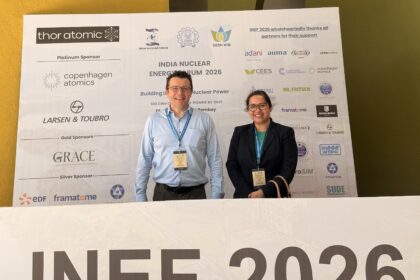
These recommendations capture the concerns, expectations, and policy priorities expressed by stakeholders during INEF 2026 at IIT Bombay.