
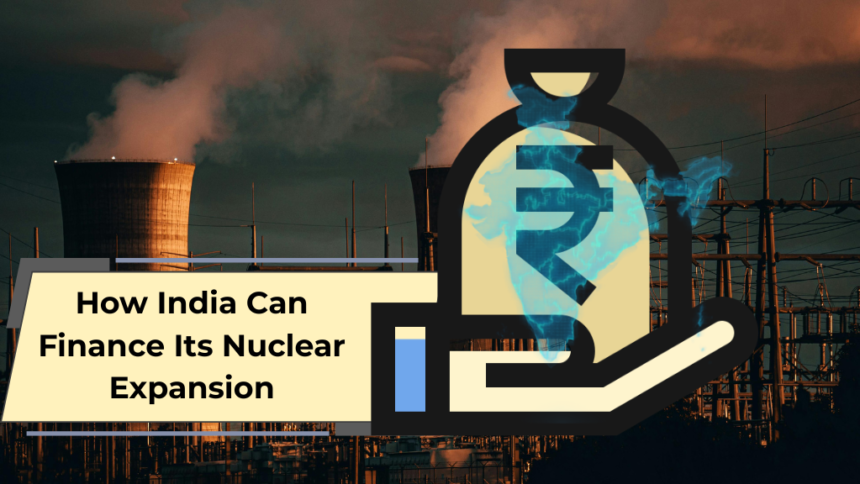
Nuclear Power Projects Funding is a key requirement for India’s goal of reaching 100 GWe of nuclear power capacity by 2047. However, nuclear projects need large investments and long construction periods. As a result, financing costs can become a major challenge. Therefore, stakeholders at INEF 2026 proposed several measures to improve project viability and attract long-term investment. The recommendations focus on affordable financing, tariff certainty, and bankable power purchase agreements.
Lower Financing Costs for New Projects
High capital costs remain one of the biggest challenges for nuclear power projects. In addition, long construction timelines increase borrowing costs. Consequently, project tariffs can become less competitive.
To address this issue, stakeholders recommended long-tenure loans of 25 to 30 years through banks, financial institutions, and commercial lenders. They also called for improved access to the rupee bond market and dedicated financing mechanisms for nuclear projects.
Furthermore, industry participants suggested incentives similar to those available for renewable energy projects. These include lower-cost debt, support for long-term power purchase agreements, a GST rate of 5 percent, duty waivers for imported equipment, and extension of the Production Linked Incentive (PLI) scheme to the nuclear sector.
According to stakeholders, these measures can lower the cost of capital and improve project bankability.
Nuclear Power Projects Funding: Tariff Certainty and Bankable Contracts
Nuclear Power Projects Funding alone is not enough. Investors also need confidence that project revenues can be recovered over the long term. However, India does not yet have dedicated tariff regulations for nuclear power projects. Therefore, stakeholders recommended the notification of Nuclear Tariff Regulations by the Department of Atomic Energy and the Ministry of Power.
The proposed framework would clearly define tariff determination, cost recovery, return on equity, and payment mechanisms. In addition, stakeholders supported a cost-plus tariff model to provide predictable revenues and reduce investment risks.
Another important recommendation is the creation of a standardised Model Nuclear Power Purchase Agreement (PPA). Such a framework can help private developers achieve financial closure more easily.
The proposed PPA would provide a long-term contract period, transparent payment arrangements, and clear cost-recovery provisions. Stakeholders also suggested multiple offtake options, including a central procurement agency, direct industrial buyers, or a hybrid model.
| Policy Area | Concern | Expectation / Recommendation |
|---|---|---|
| Project Financing & Cost of Capital | High capital costs and long construction periods lead to large financing requirements. Interest costs increase electricity tariffs and affect competitiveness. Developers may also struggle to achieve acceptable returns during the initial phase of deployment. | Facilitate long-tenure loans of 25–30 years through banks, financial institutions, and commercial lenders. Improve access to the rupee bond market and create dedicated financing mechanisms for nuclear projects. Provide lower-cost debt, incentives comparable to renewable energy, support for long-term PPAs, a 5% GST rate, duty waivers for imported equipment and systems, and extend the PLI scheme to the nuclear sector. |
| Tariff Certainty & Revenue Recovery | Nuclear projects lack a dedicated tariff determination framework. This creates uncertainty around cost recovery, return on investment, and long-term revenue streams for developers and investors. | Notify dedicated Nuclear Tariff Regulations through DAE and the Ministry of Power. The framework should clearly define tariff determination, cost recovery mechanisms, Return on Equity (RoE), payment security provisions, and stakeholder consultation processes. Stakeholders recommended adopting a Cost-Plus (Regulated Tariff) model for nuclear power projects. |
| Standardised Model Nuclear PPA | Private nuclear projects may find it difficult to achieve financial closure without a bankable, long-term, standardised power purchase agreement. Unlike renewable energy, the nuclear sector currently lacks a model PPA framework. | Develop a Model Nuclear Power Purchase Agreement (PPA) as part of the SHANTI rules framework. The proposed model includes a 35-year tenure (with a possible five-year extension), a three-part tariff structure, capacity payments based on deemed availability at a normative 85% plant availability factor, and quarterly pass-through adjustments for energy costs. Stakeholders proposed three offtake options: a central pooled procurer (SECI-type model), direct bilateral agreements with highly rated industrial consumers, or a hybrid approach combining both models. |
Overall, stakeholders believe that stronger Nuclear Power Projects Funding mechanisms, tariff certainty, and bankable contracts can unlock investment, improve project economics, and accelerate India’s nuclear power expansion.
The insights presented here are based on recommendations developed at INEF 2026 to help accelerate India’s journey toward Mission 100 GWe.