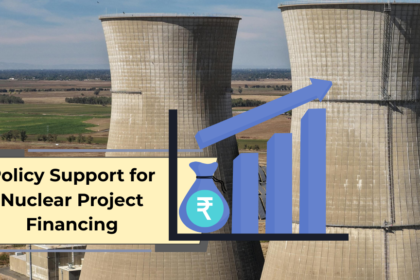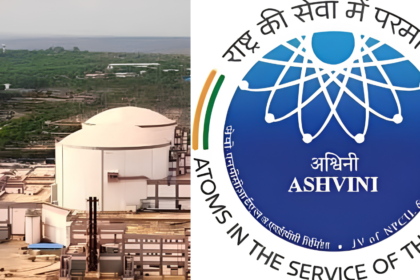


Nuclear Project Financing will play a decisive role in India’s journey towards 100 GWe of nuclear power capacity by 2047. Nuclear projects require large investments. They also operate for several decades. Therefore, investors and lenders need long-term certainty before committing capital.
Industry stakeholders believe that financing risks remain one of the biggest challenges. Consequently, they are seeking policy reforms that improve project bankability while maintaining accountability for developers.
Clear Risk-Sharing Mechanisms Can Improve Investor Confidence
Nuclear power plants operate under strict regulatory oversight. However, safety requirements can evolve over time. New regulations, safety upgrades, and certification requirements may emerge years after a project begins operation.
As a result, developers may face costs that were impossible to predict during financial closure. To address this issue, stakeholders have proposed an automatic change-in-law mechanism. Such a provision would allow clearly defined regulatory costs to be recovered without lengthy approval processes.
Nuclear Project Financing realted proposal covers changes in tax laws, AERB regulations, fuel-cycle service charges, environmental requirements, and international obligations. Meanwhile, construction risks, performance risks, and market risks would continue to remain with the developer. This approach creates a balanced allocation of responsibility. Similar risk-sharing mechanisms are widely used in infrastructure and power-sector contracts.
Stakeholders have also highlighted the need for a clear force majeure framework. Nuclear plants may occasionally face regulator-directed shutdowns for safety reviews or implementation of global lessons learned. Although such shutdowns are not caused by operator negligence, they can have serious financial consequences. Therefore, industry experts recommend treating these events as no-fault occurrences. This would allow deemed recovery mechanisms while protecting both investors and consumers.
Nuclear Project Financing: Cost-Plus Tariffs Can Improve Bankability
Experts recommend a cost-plus two-part tariff structure for nuclear power projects. A long-term auction tariff forces developers to account for future uncertainties. For example, regulators may introduce new requirements. Likewise, fuel costs may change over time. Consequently, developers add a risk premium to their bids, which increases tariffs.
Furthermore, India’s experience with thermal ultra-mega power projects highlights the risks of fixed long-term auction tariffs. Several projects faced financial stress, tariff disputes, and lengthy litigation.
Under the proposed framework:
- Capacity charges cover return on equity, interest costs, depreciation, and fixed O&M expenses.
- Energy charges cover fuel costs, heavy water, variable O&M expenses, and waste management charges.
In addition, the Department of Atomic Energy can introduce dedicated Nuclear Tariff Regulations based on established regulatory principles. Importantly, the framework avoids reverse auctions and levellised tariff bidding. At the same time, developers bear the cost of overruns. However, developers keep the benefits of efficient execution and cost savings.
Moreover, stakeholders recommend independent audits for first-of-a-kind project costs. They also support a formal consultation mechanism between the Department of Atomic Energy and power sector regulators for tariff benchmarking.
Stronger Lender Protection Can Attract Capital
Along with tariff reforms, stronger lender protection can improve investor confidence. Nuclear projects require long-term financing. Therefore, lenders need tools that protect their investments without disrupting project operations. To address this challenge, stakeholders propose a standard Direct Agreement between developers, off-takers, and senior lenders.
The agreement provides:
- Cure rights for lenders.
- At least 180 days’ notice before PPA termination.
- Step-in rights that allow lenders to nominate a substitute operator, subject to regulatory approval.
In addition, developers can refinance projects after commercial operations begin. This flexibility helps reduce financing costs when market conditions improve.
Furthermore, developers can refinance without seeking off-taker approval if they keep the project tenure and tariff structure unchanged. Developers and off-takers can then share refinancing gains equally. Subsequently, off-takers can pass their share to consumers through lower tariffs.
Stakeholders also recommend a Model Concession Agreement for the full project lifecycle. Unlike a Power Purchase Agreement, which focuses on electricity sales, a concession agreement defines rights and obligations throughout the project period.
For example, it covers: Tariff principles, Change-in-law provisions, Change-in-scope mechanisms, Force majeure provisions, Project tenure and renewal conditions, Lender step-in rights. As a result, developers, lenders, and off-takers gain greater contractual certainty.
| Head | Concern | Expectation |
|---|---|---|
| Automatic Change-in-Law & Regulatory Cost Pass-Through | Nuclear regulatory costs evolve over the life of a plant. Post-construction safety reviews, lessons-learned upgrades, and new certification requirements can emerge decades after financial closure. These costs cannot be accurately forecast at the project approval stage. | Introduce a narrowly defined but automatic change-in-law mechanism covering changes in tax laws, new AERB regulations or safety codes, fuel-cycle service fee revisions, environmental requirements, water and land-use regulations, and new international obligations. Cost adjustments should be settled through quarterly true-ups without requiring fresh adjudication for each event. Construction, performance, and market risks should remain with the developer. |
| Force Majeure & Deemed Generation | Nuclear power plants may face regulator-directed shutdowns for safety reviews or implementation of global lessons learned. These events are beyond the operator’s control but can have significant financial impacts. | Establish three force majeure categories: (1) natural events with deemed capacity-charge recovery and project tenor extension; (2) non-natural events such as war or terrorism with deemed recovery, tenor extension, and remediation cost recovery through change-in-law provisions; and (3) off-taker or grid events with deemed generation based on the normative availability factor. AERB-directed shutdowns should be treated as no-fault pass-through events when not linked to operator negligence. |
| Tariff on a Cost-Plus Two-Part Basis — Not by Auction | Long-term auction-based tariffs force developers to price in uncertainties related to capital costs, regulatory changes, and fuel prices. Past experiences with thermal UMPP projects showed tariff disputes, renegotiations, and litigation. | Adopt dedicated Nuclear Tariff Regulations based on a cost-plus two-part tariff structure. Capacity charges should cover return on equity, interest, depreciation, and fixed O&M costs. Energy charges should cover fuel, heavy water, variable O&M, and waste management costs. Reverse auctions, levellised tariffs, and contract-for-difference mechanisms should be avoided. Cost overruns should remain with developers, while efficiency gains should be retained by them. |
| First-of-a-Kind Project Cost Recognition | Initial nuclear projects often face higher costs due to technology learning curves, supply chain development, and regulatory adaptation. | Provide independently audited first-of-a-kind cost allowances for the first three projects. Establish a formal DAE–CERC consultation mechanism for benchmarking cost of capital and tariff principles. |
| Lender Step-In Rights & Refinancing Flexibility | Long-tenor nuclear project financing requires lenders to protect their investments without disrupting project operations. | Create a standard Direct Agreement between the developer, off-taker, and senior lenders. The agreement should provide cure rights, at least 180 days’ notice before PPA termination, and lender step-in rights to appoint a substitute operator, subject to AERB approval. Permit post-COD refinancing without off-taker consent when tariff and tenure remain unchanged. Refinancing gains should be shared equally between the developer and off-taker, with the off-taker’s share passed through as a tariff reduction. |
| Model Concession Agreement for the Project Lifecycle | While a Power Purchase Agreement governs electricity sales, nuclear projects also require a bankable framework covering the entire build-own-operate lifecycle. Currently, these arrangements are negotiated separately for each project. | Develop a Model Concession Agreement as a companion document to the Model PPA. The agreement should define tariff principles, change-in-law provisions, change-in-scope mechanisms, force majeure treatment, concession terms aligned with plant life (up to 60 years), renewal conditions, hand-back provisions, and lender step-in rights. This would provide consistency, reduce negotiation time, and improve project bankability. |
| Expected Outcome | Financing risks and contractual uncertainties can increase project costs and delay investment decisions. | A predictable financing and tariff framework can improve bankability, attract long-term capital, strengthen lender confidence, reduce financing costs, and accelerate deployment of nuclear power projects needed to achieve India’s 100 GWe target by 2047. |
Overall, a stable Nuclear Project Financing framework can reduce risk and improve investor confidence. Consequently, it can attract long-term capital and lower financing costs. Most importantly, it can accelerate nuclear power deployment and support India’s goal of achieving 100 GWe by 2047.
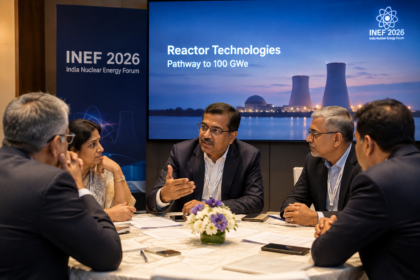
The recommendations presented here are drawn from INEF 2026 and capture stakeholder perspectives on licensing, siting, and regulatory frameworks for India’s nuclear expansion.