
Nuclear Construction Finance has emerged as a critical issue as India prepares for large-scale nuclear power expansion. Nuclear projects require substantial upfront investment. Moreover, construction periods often extend over several years. Therefore, developers and lenders face significant financial risks before a plant begins generating revenue.
Industry stakeholders believe that addressing construction-phase risks can improve project bankability and attract long-term investment. Consequently, they have proposed reforms covering insurance, cost recovery, and financing support during project development.
Insurance and Risk Management Can Improve Investor Confidence
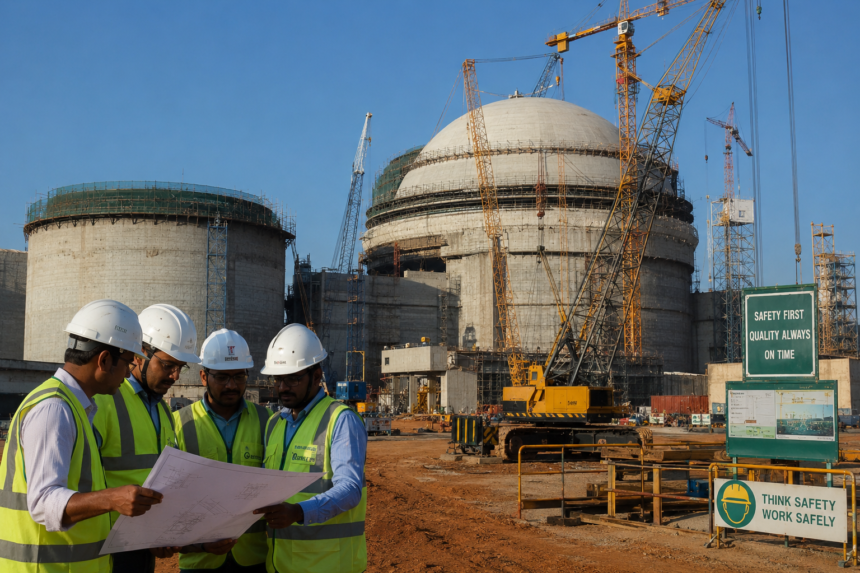
Construction remains one of the highest-risk phases of any nuclear project. Large equipment shipments, engineering challenges, and construction delays can affect project schedules and costs. Therefore, stakeholders recommend creating a standardised construction insurance framework for nuclear projects.
The proposed Nuclear Construction Finance package would include:
- Construction All Risks insurance
- Erection All Risks insurance with delay coverage
- Marine cargo insurance for major equipment transport
- Third-party liability coverage during construction
In addition, developers should have access to international reinsurance capacity where required. Stakeholders also recommend treating insurance premiums as approved project costs. Such measures can improve risk management and provide greater confidence to lenders and investors.
Cost Recovery During Construction Can Lower Financing Pressure
Stakeholders identify the construction period as the biggest financing challenge for new nuclear projects. During this phase, projects generate no revenue. However, developers continue to incur interest expenses and financing costs. As a result, the overall project cost increases before commercial operations begin.
To address this issue, stakeholders recommend combining cost-plus tariff principles with a Regulated Asset Base (RAB) approach. Under this model, developers could recover a limited portion of approved costs during construction. However, regulators would release these payments only after independent verification of project milestones.
Furthermore, authorities would cap construction-period charges and adjust them against final approved project costs. This approach can protect consumers while improving project cash flows. Stakeholders also recommend recognising the cost of capital incurred during construction, particularly for the first group of projects. These projects often face higher financing costs because lenders and investors apply additional risk premiums. Therefore, limited recognition of these costs can help projects achieve financial closure more efficiently.
Nuclear Construction Finance – Recommendations
| Recommendation Area | Concern | Expectation |
|---|---|---|
| Construction-Phase Insurance Framework | Nuclear power projects require specialised insurance coverage during construction. However, the domestic insurance market does not yet offer a standardised package that addresses all major construction risks. | Develop a standard insurance framework through GIC Re and the India Nuclear Insurance Pool. The package should include Construction All Risks (CAR), Erection All Risks (EAR) with Delay-in-Start-Up cover, Marine Cargo Insurance for major equipment transport, and Construction Third-Party Liability coverage. Allow access to international reinsurance markets and recognise insurance premiums as approved project costs for tariff recovery. |
| Cost-Plus / Regulated Asset Base (RAB) Hybrid Model | Nuclear projects face a major financing challenge during construction. Projects generate no revenue for several years while interest costs continue to accumulate. As a result, financing costs can increase significantly before commercial operation begins. | Introduce a hybrid framework that combines cost-plus tariff principles with a Regulated Asset Base (RAB) approach. Allow limited construction-period cost recovery once independently verified project milestones are achieved. Cap construction-period charges and link every payment to certified progress. Adjust charges against final approved project costs to ensure consumers pay only for completed assets. |
| Construction-Period Cost-of-Capital Recognition | First-of-a-kind projects often face higher financing costs because lenders and investors apply risk premiums during the early stages of programme deployment. These costs can delay financial closure and increase project risk. | Explicitly recognise and allow recovery of construction-period cost of capital for the first cohort of projects. Gradually reduce this support as project experience grows and financing risks decline. Route any additional public support through existing infrastructure-financing mechanisms rather than creating separate nuclear-specific instruments. |
| Expected Outcome | Construction risks, delayed revenue generation, and higher financing costs can increase project costs and discourage investment. | Standardised insurance, phased cost recovery, and recognition of construction-period financing costs can improve project bankability, reduce financing risks, support timely financial closure, and accelerate nuclear power deployment. |
Industry experts believe that construction risk management and phased cost recovery can significantly improve Nuclear Construction Finance. As a result, developers can secure funding more easily, lenders can reduce risk exposure, and projects can move from approval to construction more quickly. Most importantly, these reforms can help India accelerate the deployment of nuclear power capacity needed to achieve its 100 GWe target by 2047.
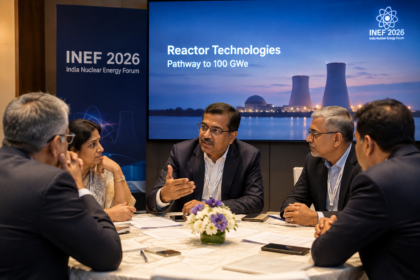
The recommendations reflect stakeholder discussions at INEF 2026 on creating a stronger, faster, and more predictable framework for nuclear project development.