

Nuclear Project Finance is not only about raising money for new power plants. It is also about building confidence among investors, lenders, policymakers, and the public. In simple words Building Investor and Public Confidence in Nuclear Power. Without trust in the financing framework, attracting large-scale private investment into nuclear energy will remain difficult.
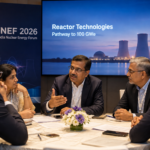
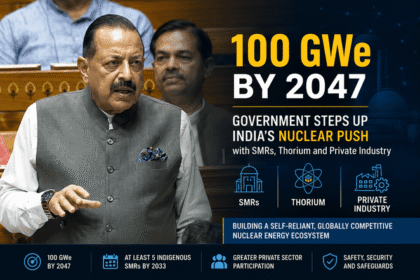
India aims to achieve 100 GWe of nuclear power capacity by 2047. To reach this goal, the country needs a stable and transparent financing ecosystem. During the India Nuclear Energy Forum (INEF) 2026, stakeholders identified several measures that can strengthen confidence and improve project bankability.
Creating a Strong and Reliable Financing Ecosystem
Investors seek long-term certainty before committing capital to major infrastructure projects. Therefore, stakeholders recommended including private nuclear power projects in the Harmonised Master List of Infrastructure Sectors.
This move would make projects eligible for financing from the National Bank for Financing Infrastructure and Development (NaBFID). With its long-tenor lending capability, NaBFID can become a major source of capital for future nuclear projects. Experts also recommended a dedicated financing window through IIFCL, PFC, and REC.
International financial institutions can also reduce project risks. The World Bank and the Asian Development Bank have reopened opportunities to support nuclear energy. As a result, Indian projects could access multilateral financing, political-risk guarantees, and partial-risk guarantees. These mechanisms can lower borrowing costs. They can also strengthen investor confidence and demonstrate international support for India’s nuclear energy programme.
Stakeholders also highlighted the importance of Export Credit Agency (ECA) financing. Many countries use ECA-backed loans to fund nuclear projects. India can adopt a similar approach. A supportive framework would help private developers access affordable long-term funding for imported technology, equipment, and specialised services.
Ensuring Long-Term Accountability and Public Trust
Public confidence is equally important for the success of nuclear power projects. Therefore, stakeholders proposed a ring-fenced Nuclear Decommissioning Fund. The goal is straightforward. Project operators should accumulate decommissioning funds during plant operations. They should not rely on future financial conditions to meet these obligations.
Under the proposal, operators would contribute a small amount from electricity generation throughout the plant’s life. An independent trust would manage these funds. The trust would also keep them separate from the developer’s balance sheet.
The fund would invest only in low-risk instruments. These include government securities, highly rated bonds, and infrastructure debt. The trust would permit withdrawals only for certified decommissioning activities. This approach ensures that adequate resources remain available at the end of a plant’s operating life. More importantly, it demonstrates long-term accountability to investors and the public.
A strong Nuclear Project Finance framework does more than provide funding. It reduces risks and improves transparency. It also builds confidence at every stage of a project’s life cycle. Domestic financing, international support, and robust safeguards can work together to create a trusted investment environment. As a result, India can attract private capital and accelerate its nuclear energy expansion.
| Head | Concern | Expectation |
|---|---|---|
| NaBFID Eligibility through the Harmonised Master List | NaBFID is designed to provide long-tenor infrastructure financing, but private nuclear projects can access its funding only after nuclear power is formally included in the Harmonised Master List of Infrastructure Sectors. | Following notification under the Harmonised Master List, recognise private nuclear power generation as an eligible sector for NaBFID financing, refinancing, and credit enhancement. Position NaBFID (authorised capital of approximately ₹1 lakh crore) as a cornerstone lender alongside the proposed IIFCL–PFC–REC Nuclear Financing Window. |
| Multilateral and Sovereign Partial-Risk Guarantees | International development finance institutions can significantly reduce financing costs and improve bankability, but only if the policy framework actively facilitates their participation in nuclear projects. | Combine the sovereign credit-enhancement mechanism with partial-risk and political-risk guarantees from multilateral institutions such as the World Bank Group, including MIGA, and the Asian Development Bank (ADB). Structure early private nuclear projects to qualify for such support. The framework should leverage the World Bank’s decision of 11 June 2025 to end its prohibition on financing nuclear power and the ADB’s re-engagement with the sector in November 2025. |
| Export Credit Agency (ECA) Financing Framework | Imported reactor systems, major components, and specialised services can benefit from low-cost, long-tenor ECA financing, but access requires a supportive regulatory and financing framework. | Establish a framework that enables private nuclear projects to access ECA-backed loans, guarantees, and insurance, coordinated with relevant export credit agencies and aligned with foreign-currency debt norms. International precedents include the UAE’s Barakah Nuclear Power Plant and nuclear export programmes supported by agencies such as Korea’s KEXIM and France’s Bpifrance. |
| Ring-Fenced Nuclear Decommissioning Fund | Public confidence requires assurance that adequate resources for decommissioning are accumulated during plant operations and are not dependent on the financial condition of the operator decades later. | Create a dedicated decommissioning fund financed through per-unit electricity generation contributions. The fund should be sized to cover inflation-indexed end-of-life decommissioning costs, including a 25% contingency margin. Funds should be held in an independently managed trust, separate from the developer’s balance sheet, with investments restricted to low-risk instruments such as government securities, AAA-rated bonds, and infrastructure debt. Withdrawals should be permitted only for certified decommissioning activities. Any surplus may revert to the Government, while any shortfall remains recoverable from the developer. |
Ultimately, Investor and Public Confidence in Nuclear Power will be one of the key drivers of India’s nuclear expansion. A transparent financing framework, supported by credible institutions and strong safeguards, can reduce uncertainty and build trust throughout the project life cycle. By creating confidence alongside capital, India can establish the foundation needed to achieve its Mission 100 GWe vision and strengthen its clean energy future.
The recommendations reflect stakeholder discussions at INEF 2026 on creating a stronger, faster, and more predictable framework for nuclear project development.