
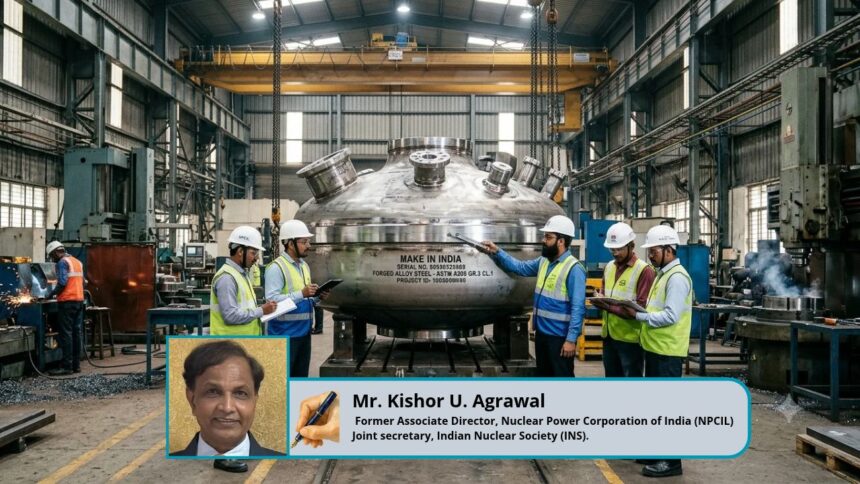
India’s target to achieve 100 GWe of nuclear power capacity by 2047 will create significant opportunities for Domestic manufacturers, Engineering companies, Material suppliers and Technology partners. However, achieving this target will require more than adding new reactors. It will depend on the ability of the Indian nuclear supply chain to advance localization, deliver qualified components, specialised materials and critical equipment on time, and maintain stringent quality and safety standards.
- PHWRs: The Foundation of Local Manufacturing (Localization)
- Closing the Gaps in Critical Manufacturing
- Long-Lead Components Must Be Planned Early
- Quality Assurance Is as Important as Capacity
- Diversification Will Expand Opportunities for Suppliers
- Localization: Role of Government, Utilities and Industry
- Preparing for the Next Phase of Nuclear Growth (Localization)
India has already developed substantial indigenous capabilities in Pressurised Heavy Water Reactor (PHWR) technology. The next challenge is to deepen nuclear localization by strengthening these capabilities, addressing remaining manufacturing gaps and preparing the supply chain for a larger and more diverse nuclear programme.
PHWRs: The Foundation of Local Manufacturing (Localization)
India’s PHWR programme provides a strong foundation for domestic nuclear manufacturing. The country has developed and operated reactors in the 220 MWe, 540 MWe and 700 MWe classes. Over time, this experience has helped establish domestic capabilities in Reactor engineering, Equipment manufacturing, Materials, Fuel-related activities and Plant construction. Standardisation has been an important factor in this progress. When reactor designs and component specifications are repeated across multiple units, manufacturers can plan production more efficiently, build experience and improve delivery schedules. Utilities can also develop more predictable procurement strategies.
However, localization should not be assessed only by the number of components manufactured in India. It is equally important to understand the domestic availability of raw materials, specialised manufacturing processes, critical subcomponents, testing facilities and the technology required to produce them. India has achieved considerable progress in PHWR localization, but certain specialised requirements may still depend on limited suppliers or capabilities that need further development. Identifying these gaps at the component level will be essential as the country expands its nuclear programme. The objective should be to deepen localisation while maintaining the quality and reliability required for nuclear applications.
Closing the Gaps in Critical Manufacturing
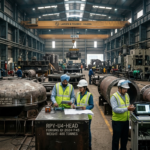
Nuclear projects depend on equipment that requires specialised manufacturing capabilities, extensive inspection and, in some cases, long production cycles. Large pressure vessels, steam generators, reactor components, pumps, motors and specialised piping systems can have a significant influence on project schedules.
Some Indian manufacturers already possess substantial heavy-engineering capabilities. However, the availability of general manufacturing capacity does not automatically mean that a company is qualified to manufacture every nuclear component. The required materials, manufacturing procedures, inspection methods, documentation and acceptance criteria must also be satisfied. Large Light-Water Reactor equipment presents another important area for capability development. India will need to strengthen its domestic manufacturing base as it considers a wider range of reactor technologies alongside its established PHWR programme. This will require investment in specialised machinery, qualified manufacturing processes, advanced inspection methods and large-scale testing infrastructure. Such facilities can help manufacturers demonstrate compliance with applicable technical requirements and reduce dependence on limited external testing capabilities.
Technology partnerships can also support this process. International collaboration, licensing arrangements and joint ventures may provide opportunities to develop domestic expertise. However, the terms of technology transfer, access to manufacturing know-how and the ability to produce critical components locally must be evaluated carefully. The objective should be to build sustainable Indian capabilities rather than simply establish a domestic manufacturing presence.
Long-Lead Components Must Be Planned Early
One of the most important lessons for nuclear project execution is that procurement planning must begin well before major construction activities gather pace. Components such as end shields, calandrias, steam generators, specialised headers, primary coolant pumps and other major equipment may require lengthy manufacturing, inspection and qualification processes. Their production schedules can influence the overall construction programme.
If procurement decisions are delayed until a project is already under construction, manufacturers may not have sufficient time to secure materials, allocate production capacity and complete the required inspections. Any delay in a critical component can affect subsequent construction and installation activities. Therefore, utilities and project developers must identify long-lead items early and align procurement schedules with reactor construction plans. Manufacturers also need better visibility of future demand. A predictable pipeline of orders can support investment decisions, workforce planning and capacity expansion. It can help suppliers move away from a project-by-project approach towards sustained production capabilities.
Standardisation can further improve this process. Repeated designs and stable specifications enable manufacturers to build experience, reduce avoidable rework and improve production planning. At the same time, project-specific requirements, including Applicable seismic design conditions and Safety criteria, must be addressed in the engineering and procurement process.
Quality Assurance Is as Important as Capacity
Scaling up nuclear manufacturing is not simply a matter of producing more equipment. Quality assurance must remain central to every stage of the supply chain. A manufacturer may have modern machinery and a technically capable workforce, yet still require additional systems and qualification before entering the nuclear sector. Nuclear procurement demands disciplined documentation, material traceability, controlled manufacturing processes, inspection records and compliance with the applicable codes and specifications. These requirements must be integrated into the entire manufacturing lifecycle, from raw material procurement to fabrication, testing, delivery and installation.
Companies seeking to enter the nuclear supply chain should therefore assess their capabilities in two areas: quality and capacity. They must determine whether their processes meet the required standards and whether they can manufacture the necessary quantities within the specified delivery schedules. Skilled manpower is equally important. Qualified welders, inspectors, engineers, quality-assurance professionals and manufacturing specialists will be required as the programme expands. Industry and utilities should work together to strengthen training, develop practical expertise and create a larger pool of nuclear-qualified personnel. Investment in testing infrastructure and technical training will help suppliers improve their readiness and support consistent manufacturing quality.
The expansion programme therefore needs to strengthen:
- Nuclear-specific quality-management systems.
- Material certification and traceability.
- Welding procedures and personnel qualification.
- Non-destructive examination.
- Metrology, calibration and testing.
- Document control and manufacturing records.
- Financial and production capacity for long-duration contracts.
This is an area where structured vendor-development programmes could substantially increase domestic manufacturing capacity.
- In addition to above all vendor should be ISO 9001 mandatory baseline, ISO 19443 nuclear QA systems and ASME section-III expectations & N stamping as per requirements.
Diversification Will Expand Opportunities for Suppliers
India’s nuclear programme is expected to include a broader mix of technologies. PHWRs will remain an important part of the country’s nuclear development, while small modular reactors (SMRs), micro modular reactors (MMRs), light-water reactors and fast breeder reactors offer additional areas for development, subject to their respective programme and deployment plans. This diversification can create opportunities across several segments of the supply chain. However, suppliers must recognise that different reactor technologies may have different material specifications, design requirements, manufacturing processes and qualification needs.
A company experienced in manufacturing components for one reactor type cannot automatically assume that its products will be suitable for another. Suppliers must understand the relevant technology, technical standards and customer requirements before investing in new capabilities. Fuel-cycle requirements also deserve attention. Zirconium-alloy materials, fuel cladding, fuel fabrication and related processing capabilities require specialised expertise and appropriate quality controls. As nuclear capacity increases, the associated material, processing and testing infrastructure must be planned accordingly.
India’s thorium resources also offer long-term strategic potential. However, translating that potential into a practical nuclear fuel cycle requires further development across mining, extraction, purification, fuel preparation and reactor technology. These activities should be considered as part of a long-term capability-development strategy rather than an immediate substitute for established fuel-cycle arrangements.
Localization: Role of Government, Utilities and Industry
Building a globally competitive nuclear supply chain requires coordinated action by government, utilities and manufacturers. The government can support capability development through clear regulatory processes, predictable policies, access to financing and an environment that encourages long-term investment. Tax treatment and project costs also influence the economics of manufacturing and should be evaluated within the wider policy framework. The government could further strengthen nuclear localisation through easier access to finance, a review of the 18% GST rate with a possible reduction to 5%, subject to policy approval, and better public awareness and support for land acquisition around nuclear project sites.
Utilities must provide clear technical specifications, realistic procurement schedules and better visibility of future requirements. Greater standardisation, wherever technically appropriate, can help manufacturers plan investments and achieve economies of scale. NPCIL and other relevant nuclear-sector organisations can contribute through technical guidance, supplier development, training and the sharing of appropriate engineering and quality requirements. Early engagement with manufacturers can help identify capability gaps before they become project-level constraints.
Industry, in turn, must invest in manufacturing capacity, quality systems, skilled manpower and specialised testing. Suppliers should not wait until a major order arrives before assessing whether they can meet the necessary technical and delivery requirements.
Foreign technology providers and manufacturing partners can also contribute through meaningful collaboration, provided that the arrangements support the development of durable domestic capabilities. Experience manufacturers as well as new manufacturers explore possibility to tie up or joint venture for new technology or developed product with foreign manufacturer. It will be win-win for both parties.
Preparing for the Next Phase of Nuclear Growth (Localization)
India’s 100 GW nuclear ambition represents an opportunity to expand domestic manufacturing, strengthen engineering capabilities and develop a more resilient industrial ecosystem. The country has a substantial foundation in PHWR technology. The next phase will require focused attention on remaining localisation gaps, critical materials, long-lead equipment, testing infrastructure, supplier qualification and workforce development.
Above all, capacity expansion must be supported by disciplined planning. Manufacturing investments, material availability, procurement schedules and quality assurance must progress together. A globally competitive nuclear supply chain cannot be built through manufacturing capacity alone. It requires reliable suppliers, qualified processes, predictable demand and close coordination between utilities, government and industry. Based on these guidelines, Indian vendors will form resilient, scalable and technologically capable nuclear supply chain in India. If these priorities are addressed systematically, Indian manufacturers will be better positioned to support the domestic nuclear programme (Localization) and develop capabilities that can serve a wider range of nuclear technologies in the years ahead.
About the Author – Mr. Kishor U. Agrawal, Former Associate Director, Nuclear Power Corporation of India (NPCIL) 36 years Meritorious service and Joint secretary, Indian Nuclear Society (INS)