
From its incorporation in 1967 to today, Uranium Corporation of India Limited (UCIL) has built a specialised national capability in uranium mining and processing—providing an essential foundation for India’s nuclear power program.
- Beginning of an indigenous capability
- From the mine to the fuel cycle
- Narwapahar and the changing face of uranium mining
- Six decades of people and expertise
- Safety and environmental responsibility
- UCIL at a new point in India’s nuclear journey
- UCIL — Six Decades of Uranium Mining: Key Milestones
- From six decades to the next chapter
India’s nuclear expansion is putting renewed attention on a part of the fuel cycle that rarely makes the headlines: uranium mining. As Uranium Corporation of India Limited (UCIL) marks 60 years since its incorporation, the Department of Atomic Energy’s uranium-mining arm is highlighting six decades of building domestic capability in mining and processing—a capability that sits at the front end of India’s nuclear power programme.
Established on 4 October 1967, UCIL has developed operations spanning underground and opencast mining, ore processing, technology development, occupational safety, radiation protection and environmental management, according to the Department of Atomic Energy.
Timing is significant. India is now preparing for a larger role for nuclear energy, putting greater focus on the complete nuclear supply chain—from uranium resources and fuel fabrication to reactor manufacturing and construction. That makes UCIL’s next chapter as relevant as its first six decades.
Question is no longer only how much nuclear capacity India plans to build, but whether the supporting fuel-cycle infrastructure can scale alongside it.
Beginning of an indigenous capability
UCIL emerged during a period when India was building the institutional and technological foundations of its nuclear program. Uranium resources were not simply a geological asset. Converting them into usable nuclear material required specialised capabilities in exploration, mining, ore processing, engineering, radiation protection and environmental management. Over the decades, UCIL developed expertise across these areas.
Its operations have included underground and opencast mining, ore processing and associated technological capabilities, supported by systems for occupational safety, radiation protection and environmental management. This evolution turned uranium mining into an increasingly specialised component of India’s nuclear industrial base.
From the mine to the fuel cycle
Uranium mining represents the front end of the nuclear fuel cycle. Journey begins with identifying and extracting uranium-bearing ore. Ore then undergoes processing to produce uranium material that can move into subsequent stages of the fuel cycle. Process connects mining operations with fuel fabrication and, ultimately, nuclear reactors. That makes UCIL’s role broader than simply operating mines. It forms part of the industrial chain that supports India’s ability to develop and sustain an indigenous nuclear power programme.
Narwapahar and the changing face of uranium mining
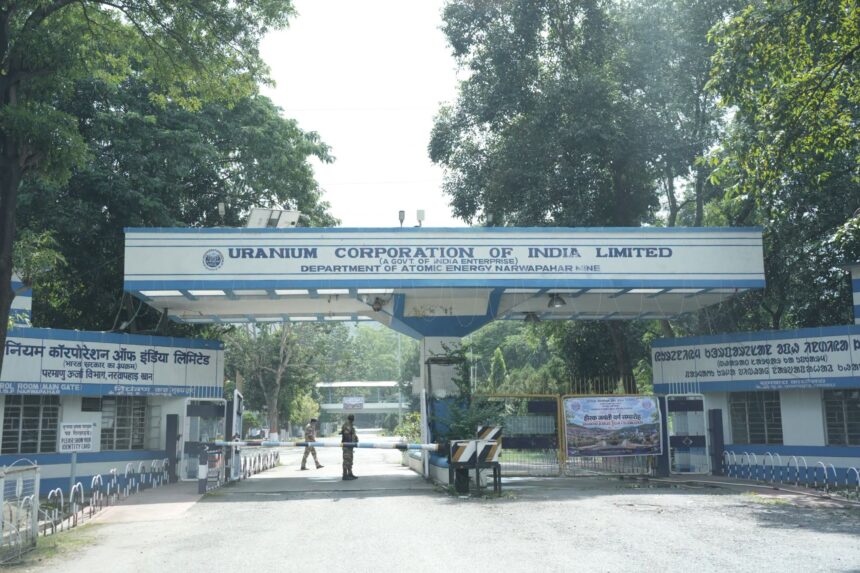
Among UCIL’s important mining operations is the Narwapahar Mine in Jharkhand. The mine represents the engineering-intensive nature of underground uranium mining, bringing together specialised equipment, technical personnel and operational systems in a challenging working environment.
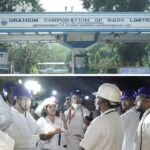
A recent journalists’ workshop at Narwapahar offered an unusual glimpse into this world. Media professionals were taken beyond the newsroom and into UCIL’s mining and milling facilities, where they saw mining operations, ore handling and processing systems and interacted with scientists, engineers and technical experts.
The visit highlighted something that is often missing from the public narrative around nuclear energy: the extensive technical infrastructure and workforce that exist before nuclear fuel reaches a reactor.
Six decades of people and expertise
Behind UCIL’s institutional journey are generations of scientists, engineers, mine workers, operators and technical professionals. Uranium mining requires specialised knowledge across geology, mining engineering, mechanical and electrical systems, processing, radiation protection, safety and environmental management. The experience accumulated over six decades represents an important part of India’s nuclear-sector knowledge base.
At UCIL’s Diamond Jubilee celebrations in Jaduguda, Seema Jain, Member-Finance, Atomic Energy Commission, highlighted the contribution of generations of personnel who worked in challenging conditions to sustain India’s uranium mining and processing capabilities. That workforce dimension is critical to understanding UCIL’s evolution. Technology can improve mining productivity and processing capability, but the operation of a nuclear fuel-cycle facility ultimately depends on people with specialised skills and institutional experience.
Safety and environmental responsibility
Uranium mining also carries responsibilities that extend beyond production. Occupational safety, radiation protection and environmental management are integral to the operation of uranium mining and processing facilities.
UCIL’s six-decade evolution has therefore involved not only expanding mining and processing capabilities but also developing systems and expertise to manage the safety and environmental dimensions associated with these activities. For the nuclear industry, these capabilities are as important as the production chain itself.
UCIL at a new point in India’s nuclear journey
India is entering a period of renewed attention to nuclear energy, with ambitions to expand nuclear generating capacity and strengthen domestic capabilities across the nuclear supply chain. That expansion will require more than reactors.
It will require fuel, components, manufacturing capacity, specialised engineering, skilled personnel and robust supporting infrastructure across the nuclear value chain. Uranium remains one of the starting points.
For UCIL, the next phase therefore comes after six decades of accumulated experience. Its future role will be shaped by the evolving requirements of India’s nuclear programme and the need to continuously strengthen mining, processing, technology, safety and environmental capabilities.
UCIL — Six Decades of Uranium Mining: Key Milestones
1967 UCIL is incorporated: Uranium Corporation of India Limited is established on 4 October 1967 under the Department of Atomic Energy. Jaduguda uranium mining begins the same year.
1967 Jaduguda Mine begins operations: Jaduguda becomes the foundation of India’s indigenous uranium mining capability. UCIL records the mine as operating since 1967.
1986 Bhatin Mine begins operations: Bhatin underground mine, located near Jaduguda, begins operation, adding to UCIL’s mining base in the Singhbhum region.
1995 Narwapahar Mine commissioned: Narwapahar becomes UCIL’s first fully mechanised, trackless underground mine, using large diesel-powered underground equipment and electro-hydraulic drill jumbos.
2003 Turamdih Mine commissioned: Turamdih becomes another major step in UCIL’s adoption of modern mechanised underground mining technology.
2007 Turamdih Mill commissioned for trial operation: UCIL’s Turamdih processing facility begins trial operation, supporting the expansion of uranium mining and processing capacity in Jharkhand.
2007/2009 Banduhurang expands opencast capability: Banduhurang becomes UCIL’s first opencast uranium mine. UCIL’s historical annual-report material records commissioning in January 2009, while earlier documentation records the project development and operation during this period. For the graphic, I recommend using “2009 — Banduhurang opencast mine commissioned” unless you have a newer UCIL source establishing another date.
2008 Bagjata Mine commissioned: The Bagjata underground mine is commissioned, further expanding UCIL’s uranium mining operations in Jharkhand.
2010s Expansion beyond Jharkhand: UCIL develops its Tummalapalle underground mine and processing plant in Andhra Pradesh, expanding India’s uranium mining and processing footprint beyond the traditional Jharkhand operations.
2024 New uranium resource identified at Jaduguda: The discovery of additional uranium resources in and around the existing Jaduguda area highlights the continuing resource potential around one of India’s oldest uranium mining centres.
2026 Diamond Jubilee Year: UCIL marks 60 years since its incorporation, highlighting six decades of experience in uranium mining, processing, technology development, occupational safety, radiation protection and environmental management.
2026 Journalists go underground: As part of the Diamond Jubilee celebrations, UCIL organises a Journalists’ Workshop at Narwapahar, giving media professionals first-hand exposure to uranium mining, ore handling and processing operations.
From six decades to the next chapter
UCIL’s Diamond Jubilee is more than an institutional milestone. It marks six decades of building and sustaining a specialised capability that operates largely away from public view. From underground mines in Jharkhand to uranium processing facilities, the organisation represents one of the earliest stages of India’s nuclear energy story. Reactor may be where nuclear energy becomes electricity. But the story starts much earlier. It starts with the resource, the mine, the technology and the people who make the fuel cycle possible. After six decades, UCIL remains an important part of that story.
| Umesh Kumar Shimladka