
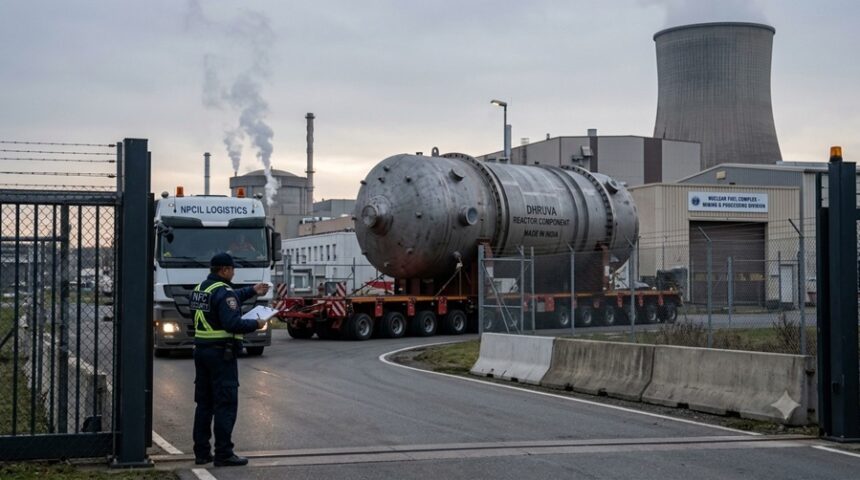
A nuclear reactor is only the visible part of a much larger industrial ecosystem. Behind every reactor are thousands of materials, components, technologies, suppliers and specialised services from uranium. And nuclear fuel to precision manufacturing, construction, safety systems and long-term maintenance. Together, this interconnected ecosystem forms the nuclear supply chain. As India prepares for a major expansion of nuclear power, understanding this supply chain is becoming as important as understanding the reactors themselves.
- What is the nuclear supply chain?
- What are the major stages of the nuclear supply chain?
- Who are the key players in the nuclear supply chain?
- Why is the nuclear supply chain important?
- What makes the nuclear supply chain different from other industries?
- What role does the private sector play?
- What is the future of India’s nuclear supply chain?
What is the nuclear supply chain?
The nuclear supply chain is the interconnected network of companies, institutions, manufacturers, engineers, specialised suppliers and service providers that support the entire lifecycle of a nuclear facility.
It begins well before a reactor is constructed with uranium mining, processing, nuclear fuel and specialised materials. And extends through engineering, component manufacturing, construction, commissioning, operations, maintenance, waste management and eventual decommissioning.
Unlike conventional industrial supply chains, the nuclear supply chain operates under exceptionally stringent requirements for quality assurance, safety, traceability, inspection, qualification and regulatory compliance.
What are the major stages of the nuclear supply chain?
Nuclear supply chain can broadly be mapped as: Uranium & Mining – Fuel Cycle – Special Materials – Engineering & Design – Nuclear Components – Manufacturing – EPC & Construction – Reactor Systems – Electrical & Instrumentation – Safety Systems – Commissioning – Operations & Maintenance – Waste Management – Decommissioning.
Each stage involves specialised technologies, qualified suppliers and stringent quality controls.
Who are the key players in the nuclear supply chain?
The ecosystem includes nuclear utilities, reactor developers, engineering companies, EPC contractors, equipment manufacturers, material suppliers, fuel-cycle companies, inspection and certification agencies, research institutions and specialised service providers.
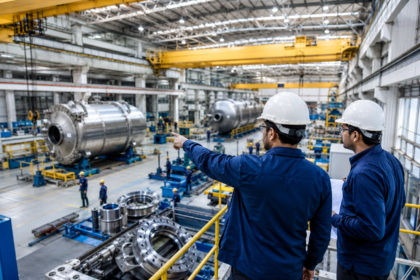
The wider industrial ecosystem also includes companies involved in forging, machining, welding, automation, digital technologies, testing, transportation, construction and maintenance.
Why is the nuclear supply chain important?
A country’s nuclear expansion depends not only on reactor technology but also on the availability of a reliable, qualified and scalable industrial base. A strong supply chain can help improve project execution, localisation, supply security, manufacturing capability, cost efficiency and long-term operational reliability.
For India, the planned expansion of nuclear capacity is expected to create opportunities across manufacturing, engineering, construction, materials, digital technologies, inspection, safety and specialised services.
What makes the nuclear supply chain different from other industries?
Nuclear industry has some of the most demanding requirements for quality and safety. Suppliers may need to demonstrate material traceability, qualified manufacturing processes, non-destructive testing, welding qualifications, inspection records, quality assurance systems, design verification and extensive documentation.
For safety-critical components, quality cannot be treated as a final inspection activity. It must be built into the entire manufacturing and supply process.
What role does the private sector play?
Private companies already participate in several areas of the nuclear industrial ecosystem, particularly in engineering, manufacturing, construction, heavy equipment, electrical systems, instrumentation, specialised services and component supply.
As India’s nuclear programme expands, a larger pool of qualified private suppliers can become increasingly important for developing domestic capacity and reducing supply-chain vulnerabilities.
What is the future of India’s nuclear supply chain?
India’s nuclear expansion presents an opportunity to move from a predominantly project-based supplier ecosystem towards a deeper, more integrated and globally competitive nuclear manufacturing base.
The next phase will require investment in specialised materials, advanced manufacturing, quality systems, skilled manpower, digital technologies, testing and certification. Strength of India’s nuclear program will ultimately depend not just on how many reactors are built, but on how effectively the country can build and sustain the industrial ecosystem behind them.