
India plans to achieve 100 GWe of nuclear power capacity by 2047. To reach this goal, the country needs more than new reactors. It also needs a strong and reliable supply chain. A large nuclear programme depends on many players. These include manufacturers, engineering firms, service providers, testing centres, and qualified vendors.
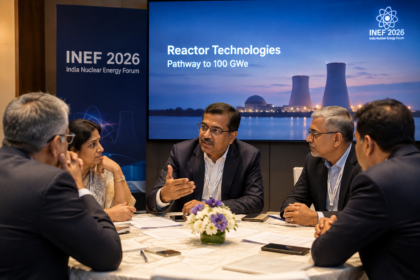
At the India Nuclear Energy Forum (INEF) 2026, industry leaders identified supply chain development as a key priority for nuclear growth.
Nuclear Supply Chain: Building Domestic Capability
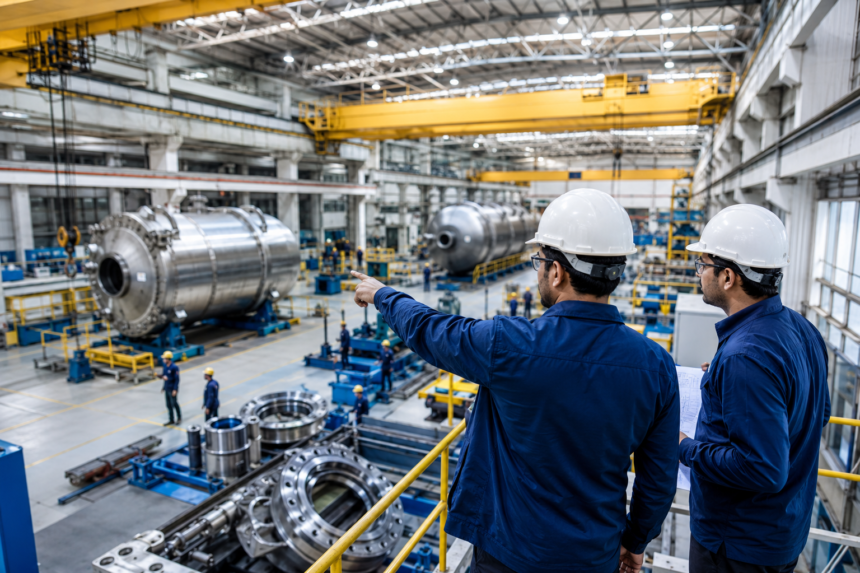
India has built strong nuclear manufacturing capabilities over many decades. However, experts believe the current supply chain may not be ready for the scale of growth ahead. Several challenges remain. Manufacturing capacity is limited in some areas. The supplier base is still small. Procurement cycles are often long. In addition, access to some advanced technologies remains restricted.
Therefore, stakeholders called for focused programmes to strengthen the entire supply chain. These programmes should support manufacturing, engineering services, testing facilities, certification systems, and advanced fabrication capabilities. The goal is clear. India should achieve 70–80 percent localisation in key nuclear systems. At the same time, Indian companies should be encouraged to enter global markets.
Supporting Indian Nuclear Supply Chain
Industry participants called for stronger support for domestic suppliers. They recommended incentives for local manufacturing and capability development. They also suggested support for companies seeking international certifications such as ISO 19443 and ASME standards.
These certifications can help Indian suppliers participate in both domestic and overseas nuclear projects. As a result, India’s nuclear industry can become more competitive in global markets.
Encouraging Technology Partnerships & Providing Long-Term Demand Visibility
Stakeholders also highlighted the need for international partnerships. They recommended encouraging foreign investment, joint ventures, and technology collaborations in key sectors.
Priority areas include digital technologies, instrumentation and control systems, special steels, forgings, and heavy engineering equipment. Such partnerships can bring new technology, improve skills, and strengthen domestic manufacturing.
Suppliers need confidence before investing in new facilities and equipment. However, many companies do not have a clear view of future demand. To address this challenge, stakeholders recommended closer coordination between the Department of Atomic Energy and the Ministry of Heavy Industries. They also suggested sharing long-term project plans with critical suppliers. This would help manufacturers expand capacity before demand increases.
In addition, industry participants proposed publishing annual NPCIL vendor pricing references. This would improve transparency and help companies plan future investments.
Strengthening Vendor Qualification & Developing Indian Nuclear Standards
India’s nuclear expansion will require more qualified suppliers. Therefore, stakeholders recommended aligning vendor qualification systems with internationally recognised standards. This includes stronger quality assurance systems, certification frameworks, and supplier accreditation processes. A stronger quality ecosystem would improve safety, reliability, and competitiveness across the sector.
Experts also stressed the need for a comprehensive Indian nuclear code and standards framework. The framework should align with international standards such as ASME Section III and International Atomic Energy Agency (IAEA) guidelines. At the same time, it should be developed and maintained within India. This would provide greater certainty for industry and support long-term growth.
Adopting Modern Construction Practices
Modern construction methods can reduce project schedules and improve efficiency. Therefore, stakeholders recommended a national programme to promote modular construction, factory fabrication, digital engineering, design twins, advanced welding technologies, and modern inspection methods. These approaches have delivered strong results in several countries. Industry experts believe India can achieve similar benefits.
| Theme | Industry Concern | Recommended Action |
|---|---|---|
| Nuclear Supply Chain Capacity | Limited domestic nuclear supply chain capacity and capability | Develop a comprehensive ecosystem covering manufacturing, engineering, testing, certification, and services |
| Localisation | Dependence on imports and limited supplier base | Achieve 70–80% localisation across key nuclear systems and components |
| Vendor Development | Limited number of qualified nuclear suppliers | Create programmes to develop new suppliers and expand existing capabilities |
| Technology Access | Constraints in accessing advanced technologies | Encourage global technology partnerships and knowledge transfer |
| International Certifications | High cost and complexity of nuclear certifications | Provide incentives and support for certifications such as ISO 19443 and ASME |
| Export Competitiveness | Limited participation in global nuclear supply chains | Help Indian suppliers qualify for international nuclear projects and exports |
| Strategic Manufacturing | Gaps in critical technology areas | Encourage FDI and joint ventures in digital systems, instrumentation & control, special steels, forgings, and heavy equipment |
| Long-Term Demand Visibility | Suppliers lack confidence to invest in capacity expansion | Share long-term project pipelines and procurement plans with industry |
| Capacity Planning | Supply chain investment often lags future demand | Coordinate between DAE and Ministry of Heavy Industries to build capacity ahead of demand |
| Vendor Pricing Transparency | Difficulty benchmarking supplier quotations | Publish annual NPCIL vendor pricing references for industry benchmarking |
| Quality Infrastructure | Supplier qualification processes require strengthening | Align qualification, certification, and quality systems with international nuclear standards |
| Nuclear Codes & Standards | Dependence on external standards frameworks | Develop a comprehensive Indian nuclear code and standards framework aligned with ASME and IAEA standards |
| Modern Construction Methods | Conventional construction limits schedule improvements | Promote modularisation, factory fabrication, digital engineering, design twins, advanced welding, and modern NDE techniques |
| Global Competitiveness | Indian suppliers need stronger market positioning | Build a globally competitive nuclear manufacturing and engineering ecosystem |
A strong supply chain will be essential for India’s nuclear future. As reactor deployment increases, suppliers must be ready to meet rising demand for equipment, components, and specialised services.
Stakeholders at INEF 2026 concluded that supply chain development is critical for Mission 100 GWe. At the same time, it offers a major opportunity. With the right policies and investments, India can become a global hub for nuclear manufacturing, engineering, and technology services.
Based on deliberations at INEF 2026, these recommendations outline industry expectations and policy priorities for enabling Mission 100 GWe by 2047.