
India’s ambition to achieve 100 GWe of nuclear power capacity by 2047 will require more than new reactors and investments. It will also require a regulatory framework (Nuclear Regulations) that is efficient, transparent, and trusted by all stakeholders. During discussions at INEF 2026, industry participants highlighted the need for reforms that can improve project execution while preserving India’s strong nuclear safety standards.
Nuclear Regulation and Project Timelines
One of the major concerns raised by stakeholders is the long duration of nuclear project development. Recent indigenous nuclear power projects have taken between 12 and 14 years from construction start to commercial operation. Such extended timelines increase project risks and financing costs. They also affect investor confidence and project planning.
To address this challenge, stakeholders have proposed an integrated project timeline covering the entire development cycle. The recommendation calls for an 84-month project schedule from siting approval to commercial operation. In addition, annual performance reporting and milestone tracking can improve transparency and accountability. Stakeholders also believe that future units at the same site can be completed faster through standardized designs, parallel processing, and better project management.
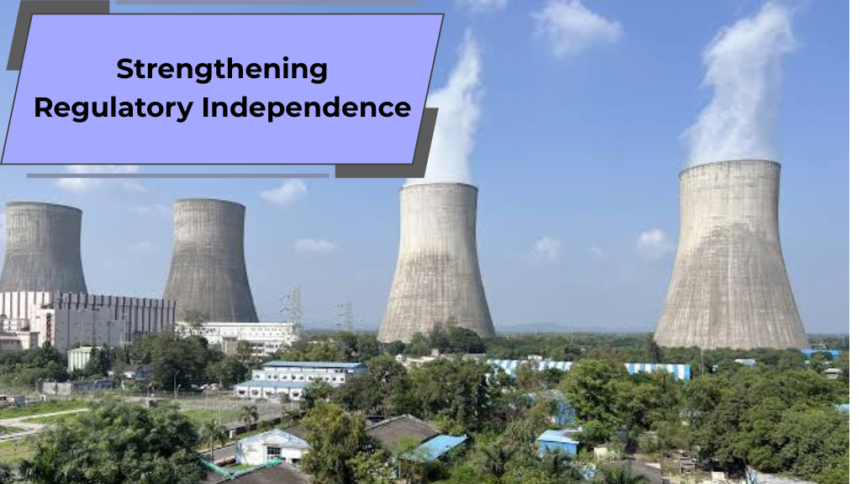
Strengthening Regulatory Independence
Industry participants also emphasized the importance of a strong and independent regulator. While AERB has played a critical role in ensuring nuclear safety, stakeholders believe its authority and resources should have a stronger statutory foundation.
Therefore, the industry recommends measures to strengthen regulatory independence, funding stability, and institutional capacity. Some stakeholders have also suggested examining the future creation of a Nuclear Safety Regulatory Authority (NSRA) through dedicated legislation. At the same time, they stress the need to enhance AERB’s technical expertise, autonomy, and manpower in the near term.
Improving Regulatory Mechanisms
Another recurring concern is the limited understanding of regulatory processes among new entrants and future operators. As India’s nuclear sector expands, more organizations are expected to participate in project development and supply chains. Consequently, stakeholders believe greater regulatory clarity will be essential.
The industry has recommended wider stakeholder engagement and awareness programmes to improve understanding of regulatory requirements. In addition, expanding regulatory capacity and introducing digital approval systems can improve efficiency and reduce delays. Stakeholders also support greater industry participation in the development of regulations and regulatory guidance documents.
| Recommendation Area | Concern | Expectation |
|---|---|---|
| Statutory Milestone Timelines | Recent indigenous nuclear projects have taken 12–14 years from construction start to commercial operation. Long project durations increase financing costs, project risks, and investor uncertainty. | Introduce an integrated 84-month project timeline from siting approval to commercial operation. Publish annual performance reports and milestone tracking. Reduce timelines for subsequent units through standardization, parallel processing, and improved project execution. |
| Statutory Underpinning of AERB Independence | AERB’s authority, autonomy, and resources largely depend on executive arrangements rather than a dedicated statutory framework. | Establish a stronger statutory basis for AERB’s independence, funding stability, and regulatory authority. Explore the future creation of a Nuclear Safety Regulatory Authority (NSRA) while strengthening AERB’s autonomy, manpower, and technical capabilities. |
| Regulatory Mechanism | Limited understanding of regulatory processes, particularly among new entrants and future operators. Lengthy approval timelines and lack of clarity can delay project development. | Conduct awareness and training programmes for new operators. Expand regulatory capacity and expertise. Develop digital approval and tracking systems. Encourage industry participation in the formulation of regulations, regulatory guidance documents, and consultation processes. |
Overall, the message from the nuclear community is clear. Strong regulation and nuclear safety must remain non-negotiable. However, regulation should also be predictable, transparent, and responsive to the needs of a growing sector. As India moves toward Mission 100 GWe, stakeholders believe regulatory reforms can help reduce delays, improve investor confidence, and accelerate the deployment of new nuclear capacity.
This article is based on the policy recommendations developed during the India Nuclear Energy Forum (INEF) 2026, held at IIT Bombay on 29–30 May 2026. The forum brought together policymakers, regulators, industry leaders, researchers, startups, investors, and international experts to discuss the actions needed to accelerate India’s journey toward 100 GWe of nuclear power capacity by 2047. The recommendations presented here reflect the concerns, expectations, and collective views of the Indian nuclear community on strengthening licensing, siting, and regulatory frameworks for future nuclear projects.