
Bengaluru, October 1, 2026: India’s expanding nuclear power program is opening opportunities for engineers across disciplines. These include electronics, instrumentation, automation and communication technologies, said Mr. N. Rama Mohan, Fellow of the Indian National Academy of Engineering (INAE) and former Executive Director (Engg. LWR) and Executive Director (Reactor Safety and Analysis), Nuclear Power Corporation of India Limited (NPCIL).
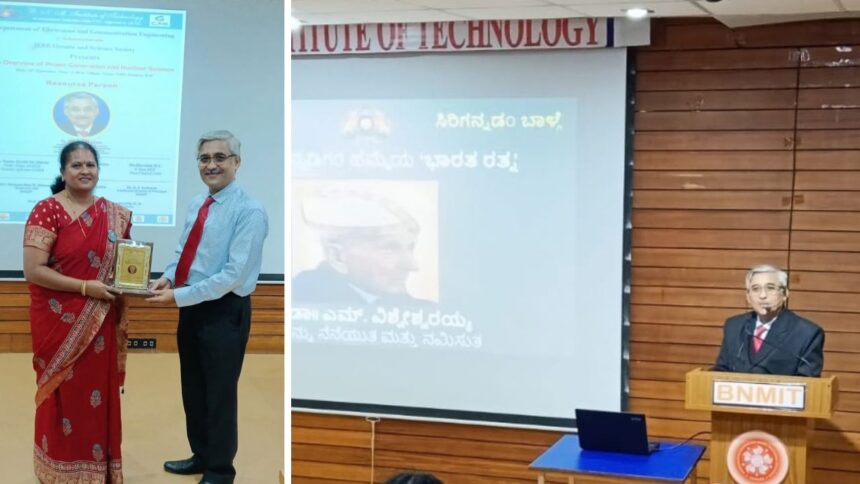
Mr. Rama Mohan is also a member of the Editorial Advisory Board of Nuclear .IN Magazine. He was speaking at “An Overview of Power Generation and Nuclear Science,” a technical session organised by the Department of Electronics and Communication Engineering (ECE), B. N. M. Institute of Technology (BNMIT), in association with the IEEE Circuits and Systems Society (CASS).
Session was held on September 30, 2026, from 11:00 AM to 1:00 PM at N401, Seminar Hall, BNMIT. It introduced students to the fundamentals of power generation, nuclear science and India’s growing nuclear ecosystem.
From a Bicycle Dynamo to Nuclear Power
Mr. Rama Mohan began with the basics of electricity generation. He explained conventional and non-conventional energy sources, including thermal, hydro, solar, biogas and nuclear energy. He used the simple example of a bicycle dynamo to show how mechanical energy can be converted into electrical energy.
Students learned how different forms of energy are converted into electricity. The discussion then moved to nuclear science. It covered the evolution of the Periodic Table, the atom, uranium, nuclear fission and fusion.
Mr. Rama Mohan also explained how nuclear fission produces heat. This heat is then used to generate electricity in a nuclear power plant.
India’s Nuclear Ecosystem and Workforce
The session introduced students to India’s power and nuclear ecosystem. It covered organisations such as DAE, BARC, NTPC and NPCIL. Mr. Rama Mohan also discussed the workforce requirements of India’s expanding nuclear program. He highlighted India’s long-term 100 GWe nuclear power ambition. He emphasised that this growth will require talent from many engineering disciplines. The opportunities will not be limited to nuclear engineers.
INF and Nuclear .IN: Connecting Students with the Nuclear Sector
Mr. Rama Mohan also introduced students to the India Nuclear Forum (INF). He explained INF’s role and activities in building awareness, knowledge exchange and connections across India’s nuclear ecosystem.
As a member of the Editorial Advisory Board of Nuclear .IN Magazine, he also explained the role of the magazine, which is published by INF. He highlighted Nuclear .IN Magazine as a platform covering developments in nuclear technology, industry, policy, supply chains, workforce and emerging opportunities.
The introduction gave students a wider view of the nuclear sector beyond their academic curriculum. It also familiarised them with the institutions, industry developments and knowledge platforms shaping India’s nuclear ecosystem.
Opportunities for Electronics and Communication Students
For ECE students, the session highlighted opportunities in several areas. These include instrumentation and control, sensors, electronics, automation, communication systems, monitoring and diagnostics, embedded systems and digital technologies.
As India’s nuclear program expands, professionals from diverse engineering backgrounds will be needed across design, manufacturing, construction, commissioning, operations, maintenance, safety, control systems, digital technologies and research. The session gave students a broader perspective on how their ECE education can connect with India’s evolving energy and nuclear sector.
Looking Beyond the Classroom
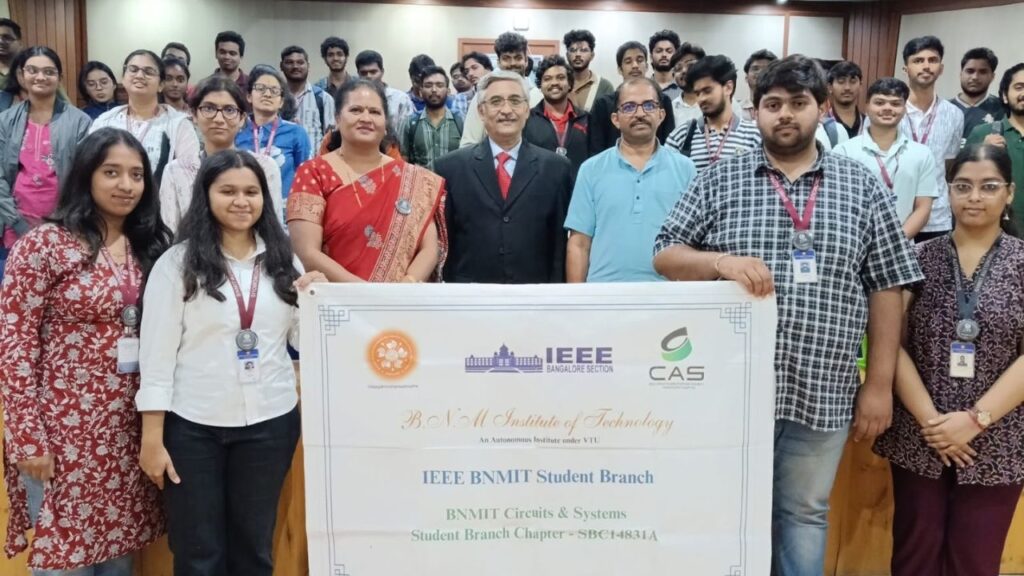
The session encouraged students to look beyond conventional career pathways. It highlighted the growing role of electronics, instrumentation, control, automation and digital technologies in the nuclear sector.
Strong engineering fundamentals, combined with awareness of emerging technologies and industry developments, can help students prepare for opportunities in India’s expanding energy and nuclear ecosystem. Interaction also highlighted the value of platforms such as INF and Nuclear .IN Magazine in helping students stay informed about the sector, its technological developments and the professional opportunities emerging alongside India’s nuclear expansion.
Faculty and Student Leadership
The program was coordinated by Dr. Yasha Jyothi M. Shirur, HoD, Department of ECE and Faculty Advisor–CASS – B. N. M. Institute of Technology (BNMIT). Student coordinators were Ms. Debarati Mukherjee, VII Semester ECE and Chair–CASS, and Ms. Harshini H, V Semester ECE and Vice Chair–CASS.