
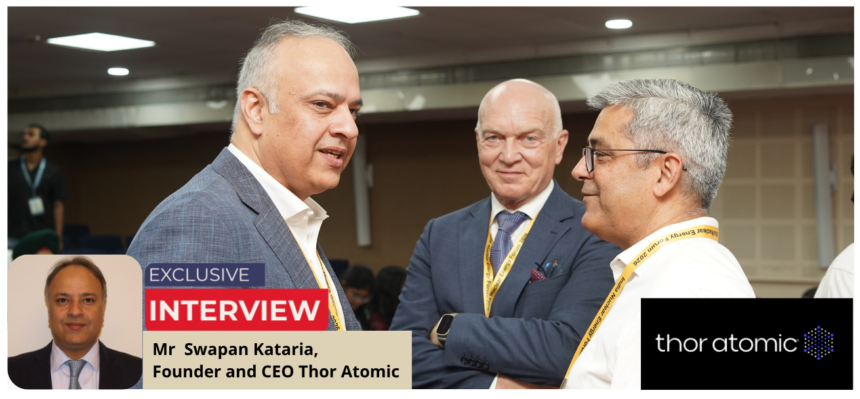
For more than seventy years, thorium has occupied a unique place in India’s nuclear ambitions. Rich in thorium resources but relatively limited in uranium reserves, India has long viewed thorium as a strategic asset capable of supporting long-term energy security. Yet despite decades of research, commercial deployment has remained elusive. For Swapan Kataria, Founder and CEO of Thorium Atomic Power Corporation “Thor Atomic”, the coming decade could mark a turning point.
Speaking with INF Magazine Nuclear.IN following the India Nuclear Energy Forum 2026, Kataria argues that a combination of geopolitical realities, energy demand growth and private-sector participation may finally create the conditions needed to move thorium from research laboratories into commercial applications. “The world has changed,” Kataria says.
“Energy security is now being viewed differently. Countries and industries increasingly want greater control over their long-term energy future.” Unlike many advanced nuclear companies that focus primarily on reactor technology, Thor Atomic has chosen a different path. The company is developing thorium-based fuel solutions for light-water reactors, a segment that today represents the vast majority of the global nuclear market.
“India has developed tremendous expertise around heavy-water reactors, but globally nearly ninety percent of the operating nuclear fleet is based on light-water reactor technology. We believe thorium must also find its place within that ecosystem.”
The company’s ambitions extend beyond fuel development. Thor Atomic increasingly presents itself as part of a broader vision for future nuclear infrastructure, one that could eventually position India as both a technology developer and exporter.
Kataria describes this evolution as a transition from “energy independence to energy dominance.” Today, countries seeking nuclear power typically rely on established reactor vendors from the United States, Europe, Russia or other major suppliers. Over the longer term, he believes India could become a provider of advanced nuclear solutions to emerging economies across Asia, Africa and the wider Global South.
“We should not only think about supplying our own market,” he explains. “India has the potential to support countries that need reliable, carbon-free energy for growth and industrial development.” Industrial demand is another area where Thor Atomic sees significant opportunities. Several Indian states are currently exploring nuclear energy as part of broader economic development strategies, particularly for energy-intensive industries requiring reliable baseload power.
According to Kataria, large industrial facilities increasingly recognize the strategic value of secure domestic energy supplies. Captive nuclear generation could reduce pressure on transmission networks while providing long-term price stability for major industrial consumers. “Many industries cannot afford interruptions,” he notes.
“They need reliable power twenty-four hours a day. Nuclear energy can provide that foundation.” Kataria also argues that the commercial case for thorium deserves greater attention. While discussions about thorium often focus on resource availability and long-term energy independence, he believes economics may ultimately become one of the technology’s strongest advantages in India.
“India is an extremely price-sensitive market,” he says. “When you combine local resources, local manufacturing and a domestic fuel cycle, thorium has the potential to become one of the most competitive forms of nuclear energy available.”
According to Kataria, the debate should not be framed solely around strategic autonomy. Even when assessed through a purely commercial lens, he believes thorium-based fuel solutions could offer significant advantages for a country seeking to expand nuclear generation while maintaining affordable electricity costs for industry and consumers. He also points to a growing awareness of supply-chain security. Recent geopolitical developments have reinforced concerns about dependence on imported resources and critical energy inputs. For Thor Atomic, India’s substantial thorium reserves create a unique advantage.
“If India wants to become a leader in thorium, the foundation is already here,” Kataria says. “India is where the resource exists. That gives the country an opportunity few others possess.” The road ahead remains challenging. Regulatory approvals for advanced nuclear technologies are complex and often measured in decades rather than years.
Kataria acknowledges that commercialization will require patience, sustained investment and long-term policy support. Nevertheless, he remains optimistic. By 2030, Thor Atomic hopes to be progressing through regulatory milestones for both fuel development and future deployment projects.
More broadly, Kataria believes India has an opportunity to establish itself as the center of a new global thorium ecosystem. Whether that vision becomes reality remains to be seen. What is clear, however, is that thorium is once again moving from the margins of the nuclear conversation toward the center of India’s long-term energy strategy.