
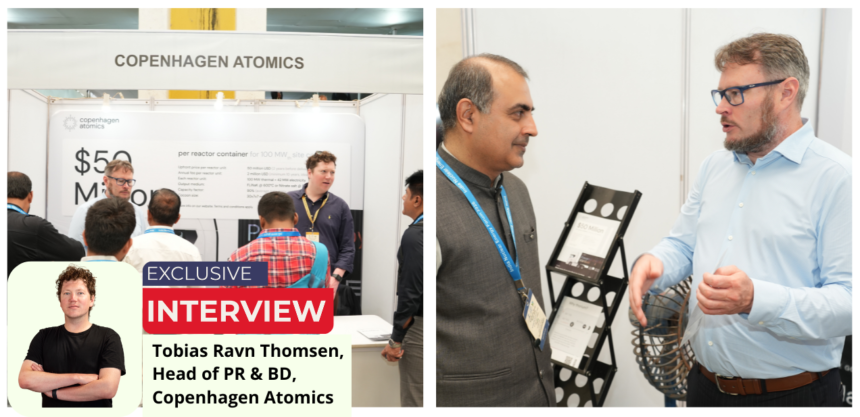
Copenhagen Atomics believes the nuclear industry needs a new model. Rather than treating each power plant as a unique construction project, the Danish company is pursuing a different vision: manufacturing nuclear reactors in factories and delivering them as standardised products.
The difference is fundamental. Most nuclear projects involve constructing a bespoke power plant from the ground up. We manufacture standardised reactor modules in a factory and deliver them to partners who build everything else.
At the heart of the company’s strategy is a molten salt reactor designed around industrial production. Reactor modules are manufactured in a factory, transported to site and integrated into facilities largely built by local partners. The reactor itself is designed to fit inside a custom-built 40-foot shipping container — a constraint deliberately chosen to enable large-scale manufacturing and efficient logistics.
You cannot mass manufacture something that is different every time. We designed the reactor around that challenge from the beginning.
The company’s long-term vision targets production rates measured in reactor modules per day rather than projects per decade — what Copenhagen Atomics describes as nuclear gigafactories operating on assembly lines.
For India, this manufacturing philosophy aligns closely with one of the dominant themes at INEF 2026: localisation. Unlike conventional nuclear projects where large portions of the plant may be imported, Copenhagen Atomics proposes a model in which local partners build most of the facility. Indian EPC contractors, manufacturers and engineering firms would be responsible for turbines, balance-of-plant systems, civil works and supporting infrastructure, while Copenhagen Atomics supplies the reactor module, fuel and moderator.
All surrounding systems except the reactor vessel itself would be designed, procured and built locally.
India also offers something few countries can match: thorium. For decades, India has pursued a strategy aimed at unlocking the potential of its vast thorium reserves. Copenhagen Atomics believes molten salt technology may provide a practical route toward realising that ambition.
“If India wants a true breeder reactor that ultimately runs on thorium, molten salt reactors may be the only viable path.”
Molten salt reactors allow continuous removal of fission products during operation — a characteristic Copenhagen Atomics considers essential for achieving a practical thorium breeder cycle. The high operating temperatures also open significant potential in industrial applications: aluminium production, ammonia manufacturing and hydrogen generation, sectors where India’s rapidly growing manufacturing base is seeking reliable, low-carbon energy.
Copenhagen Atomics is realistic about the timeline. Regulatory approval remains the key milestone for any advanced reactor technology, and Thomsen acknowledges that licensing and demonstration projects require time.
“The first plants matter enormously. They establish the regulatory template, demonstrate performance at scale and build confidence throughout the supply chain.”
If those first projects succeed, the implications for India could extend beyond electricity generation. India possesses the manufacturing capacity, engineering talent and industrial ecosystem to scale proven technologies rapidly. Copenhagen Atomics believes that combination could eventually justify locating one of its future gigafactories in India — making it not merely a recipient of the technology, but a regional manufacturing hub for nuclear reactor modules serving markets far beyond its borders.
The question Copenhagen Atomics is posing to India’s nuclear establishment is a simple one: can nuclear energy become a manufactured product? If the answer is yes, the future of the sector may look less like a construction site — and more like a factory floor.
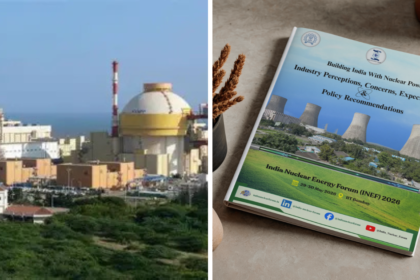
The India Nuclear Energy Forum 2026 took place at IIT Bombay on 29–30 May 2026.