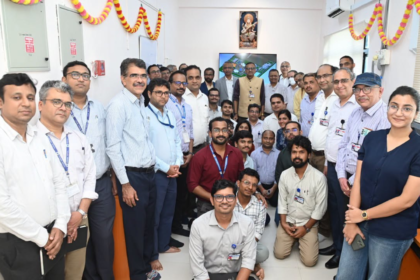


Nuclear Insurance Reforms are becoming increasingly important as India expands its nuclear power programme. As new projects and private investments enter the sector, stronger insurance and liability frameworks will be needed. Therefore, stakeholders at INEF 2026 called for reforms to improve risk coverage, strengthen investor confidence, and support long-term project development.
The recommendations focus on three key areas. These include expanding the India Nuclear Insurance Pool, improving liability clarity, and creating a specialised dispute-resolution mechanism.
Expanding Insurance Capacity and Liability Clarity
At present, the India Nuclear Insurance Pool (INIP) has a capacity of about ₹1,500 crore. However, stakeholders noted that this may not be sufficient for future large-scale nuclear projects. A single major claim could place significant pressure on the existing pool.
Therefore, stakeholders recommended expanding the pool to around ₹4,000 crore in the near term. Over the next five years, the capacity could gradually increase to about ₹7,500 crore. This can be achieved through additional domestic insurance participation and cooperation with international nuclear insurance pools.
Stakeholders also called for automatic reinstatement of insurance coverage after a claim. In addition, they recommended that private developers should have access to the insurance pool on terms similar to NPCIL.
Another concern relates to liability allocation for multi-unit nuclear installations. Greater clarity in this area can reduce uncertainty and improve project bankability. As a result, investors and lenders may be more willing to support future nuclear projects.
Nuclear Insurance Reforms: Specialised Dispute Resolution for Nuclear Projects
Nuclear projects involve complex technical, legal, and commercial issues. Therefore, stakeholders believe that conventional commercial arbitration may not always be sufficient. To address this challenge, they proposed a dedicated Nuclear Project Dispute Resolution Panel. The panel would include experts with experience in nuclear technology, regulation, law, and project development.
Stakeholders also recommended standard dispute-resolution procedures covering negotiation, expert determination, mediation, and arbitration. This would provide a structured process for resolving disputes while reducing delays.
At the same time, matters related to technical determinations made by AERB would remain outside arbitration. In such cases, judicial review would continue to be the appropriate route for resolution.
| Policy Area | Concern | Expectation / Recommendation |
|---|---|---|
| India Nuclear Insurance Pool (INIP) Expansion | The current India Nuclear Insurance Pool (INIP) capacity of approximately ₹1,500 crore is lower than the proposed ₹3,000 crore top-tier graded operator liability cap. A single major claim could exhaust the available coverage, and there is no automatic reinstatement mechanism. Private developers also seek equal access to the insurance pool. | Expand INIP capacity to around ₹4,000 crore in the near term, matching the proposed top-tier liability cap, and progressively increase capacity to approximately ₹7,500 crore over five years through additional domestic insurance capacity and structured international retrocession with established foreign nuclear insurance pools. Introduce automatic reinstatement after claims, standardise policy wording with the SHANTI contractual-recourse framework, enable insurers to assume additional nuclear risk under IRDAI guidelines, and provide private developers access to the pool on terms similar to NPCIL. |
| Insurance and Nuclear Liability | Uncertainty remains regarding liability allocation for multi-unit nuclear installations. In addition, existing insurance capacity may be insufficient to support large-scale nuclear power projects and future private-sector participation. | Expand the nuclear insurance pool and establish stronger risk-sharing mechanisms. Provide greater clarity on liability allocation for multi-unit installations to improve investor confidence and project bankability. |
| Special Nuclear Dispute-Resolution Mechanism | Nuclear projects involve highly specialized technical, legal, regulatory, and commercial issues that may not be adequately addressed through conventional commercial arbitration processes. | Establish a Nuclear Project Dispute Resolution Panel comprising senior technical, legal, and commercial experts. Introduce standard tiered dispute-resolution clauses covering negotiation, expert determination, mediation, and arbitration in model PPAs, EPC contracts, and technology-supply agreements. Arbitration should be governed by Indian law with an Indian seat. Matters involving AERB technical determinations should remain outside arbitration, with judicial review serving as the appropriate recourse mechanism. |
Overall, stakeholders believe that stronger Nuclear Insurance Reforms can improve risk management, enhance investor confidence, and create a more stable foundation for India’s long-term nuclear energy expansion.
These recommendations emerged from INEF 2026 discussions and represent the collective voice of stakeholders working to advance India’s nuclear energy ambitions.