

Imported Reactor Technologies can help India expand nuclear power capacity faster. However, industry stakeholders believe the approval and licensing process needs greater clarity. Without clear rules, project costs can increase. As a result, investment decisions may be delayed and project risks can rise.
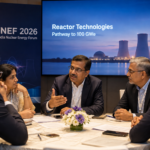
These recommendations emerged during discussions at the India Nuclear Energy Forum (INEF) 2026. During the discussions, participants highlighted several challenges facing new project developers. Therefore, they called for predictable licensing frameworks, transparent project delivery models and fleet-based deployment strategies. Together, these measures can reduce uncertainty, improve investor confidence and support faster deployment of nuclear power projects. Imported Reactor Technologies, Nuclear Power Fleet Deployment, EPC Models NPCIL Mission 100 GWe
Clear Licensing Can Reduce Project Risks
Today, developers face uncertainty when evaluating imported reactor technologies. In many cases, they must secure both technology approval and site-specific approvals. As a result, project timelines and costs can increase. Therefore, industry stakeholders recommended a clear approval framework for imported reactors. The framework should define how private companies can acquire and deploy reactor technologies approved by overseas regulators.
Experts also suggested a detailed comparison of reactor technologies available globally. Such studies can help developers understand the strengths, limitations and suitability of different reactor designs. In addition, stakeholders recommended that reactor technologies be shortlisted through a national Expression of Interest (EoI) process. This would allow the Government to identify technologies that are commercially viable and suitable for Indian conditions.
At the same time, technology transfer and domestic manufacturing should be key selection criteria. Consequently, India can strengthen local capabilities while expanding nuclear power capacity. Industry also emphasized the need for early engagement between reactor suppliers and the Atomic Energy Regulatory Board (AERB). This can help identify licensing requirements early and reduce delays later in the project cycle.
Fleet Deployment and EPC Models Can Lower Costs
InIndustry experts believe that building reactors one at a time limits opportunities for cost reduction. Therefore, they recommended fleet or serial deployment of standard reactor designs. Under this approach, multiple reactors are built using the same technology platform.
As a result, manufacturers and suppliers can gain experience with each project. This helps improve efficiency, reduce costs and shorten construction schedules. In addition, project developers can benefit from proven designs and established supply chains. This approach has delivered positive results in countries such as France and South Korea. Consequently, stakeholders believe fleet deployment can play a major role in India’s nuclear expansion programme.
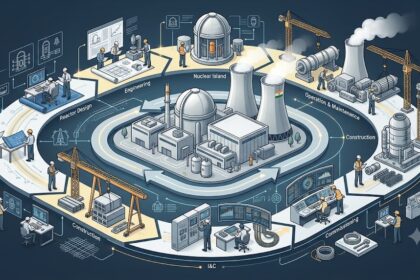
At the same time, participants highlighted the need for flexible Engineering, Procurement and Construction (EPC) models. Since developers have different levels of experience, they need options that match their capabilities and risk appetite. The proposed models include:
- Model A: NPCIL delivers the entire project on a full turnkey basis.
- Model B: NPCIL delivers the nuclear island, while the developer manages the balance of plant.
- Model C: The developer or an Indian EPC company leads project execution under NPCIL technical oversight.
Industry stakeholders also recommended transparent pricing across all three models. Furthermore, project costs should be benchmarked against reference capital costs established by the Department of Atomic Energy (DAE). This would improve cost visibility and support better investment decisions.
Experts also stressed the importance of performance guarantees. For example, NPCIL could provide commitments on plant performance, construction schedules and design reliability when licensing its technology. Such guarantees are common among leading international reactor vendors. Therefore, similar provisions in India can improve investor confidence. More importantly, they can strengthen project bankability and support greater private-sector participation in nuclear power development.
Imported Reactor Technologies
| Area | Concern | Recommendation |
|---|---|---|
| Imported Large Reactor Technologies | Developers face uncertainty due to multiple approval requirements, design reviews and licensing processes. The cost and time involved in acquiring foreign reactor technologies can affect project viability. | Conduct comparative studies of global reactor technologies. Establish clear approval and licensing frameworks for imported reactors. Shortlist suitable technologies through a Government-led Expression of Interest (EoI) process. Selection criteria should include safety, commercial viability, technology transfer and domestic manufacturing content. Encourage early engagement between technology providers and AERB to streamline approvals. |
| EPC Partnership Models with Transparent Pricing | Developers have different levels of experience in building nuclear projects and require flexible project delivery options. | Offer three EPC models: Model A: NPCIL full turnkey EPC; Model B: NPCIL delivers the nuclear island while the developer executes the balance of plant; Model C: Developer or Indian EPC partner leads the project under NPCIL technical oversight. Ensure transparent pricing and benchmark costs against DAE reference capital costs. |
| NPCIL Performance Guarantees and Construction Commitments | Private developers and lenders require confidence that licensed technologies will perform as promised. Without performance guarantees, projects may face financing challenges. | Enable NPCIL to provide performance guarantees covering net capacity, heat rate and project schedules. Introduce construction delay compensation mechanisms with defined exceptions. Provide long-term design support and defect warranties. Establish sovereign support mechanisms where required to enhance project bankability. |
| Fleet and Serial Procurement for Cost Reduction | Procuring reactors one project at a time limits learning-curve benefits and increases costs. | Enable fleet-mode and serial procurement for standardised reactor designs. Support multi-unit and multi-project orders for Indigenous PHWRs and shortlisted imported reactors. Allow technology providers and suppliers to plan against a long-term project pipeline. Pass resulting cost savings to consumers through regulatory mechanisms. |
| Technology Transfer and Local Manufacturing | Imported projects may deliver limited benefits to the domestic industrial ecosystem if localisation requirements are unclear. | Include technology transfer and domestic manufacturing commitments as key criteria in technology selection and procurement decisions. Encourage localisation of equipment, services and engineering capabilities to strengthen India’s nuclear supply chain. |
Industry leaders believe that clear licensing rules, transparent EPC models and fleet-based deployment will be essential for scaling up nuclear power in India. Together, these measures can reduce project risk, lower costs and shorten construction timelines. They can also improve investor confidence, support domestic manufacturing and strengthen technology transfer. Most importantly, they can create a predictable pathway for deploying both indigenous and imported reactor technologies at scale. Such reforms will be critical for achieving India’s goal of 100 GWe of nuclear power capacity by 2047.
The recommendations reflect stakeholder discussions at INEF 2026 on creating a stronger, faster, and more predictable framework for nuclear project development.