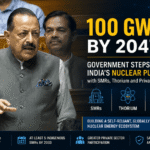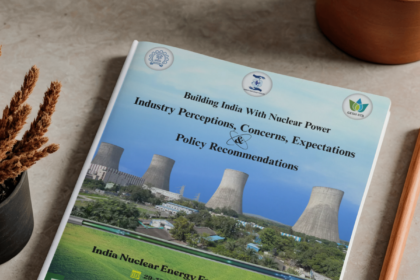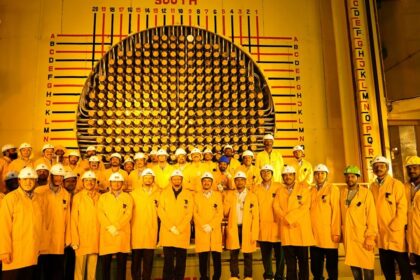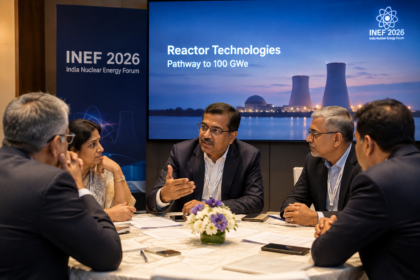

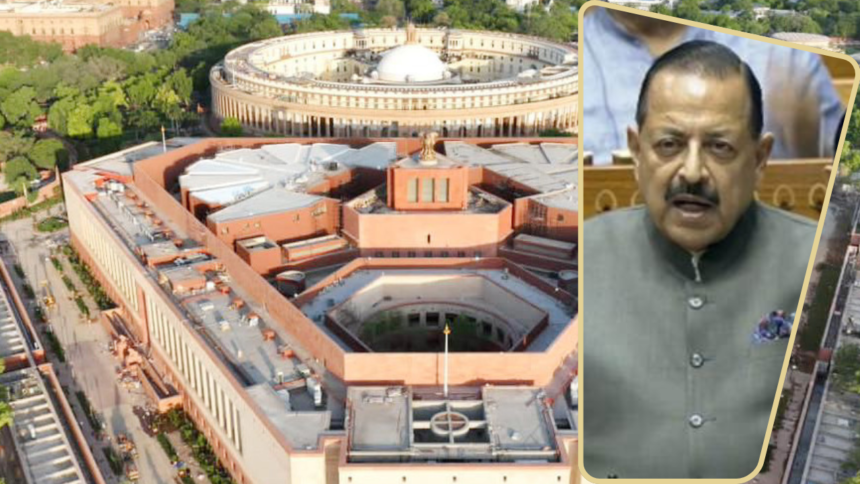
India’s nuclear energy programme (Nuclear power projects) has entered a significant phase of expansion. According to the latest information presented in Parliament on August 13, 2026, the country currently has approximately 8,000 MW of nuclear power capacity (Nuclear power projects) under construction, spread across ten reactor units and multiple technologies. These projects, once commissioned, will strengthen India’s clean energy portfolio and contribute to the national goal of achieving 100 GWe of nuclear power capacity by 2047.
- India’s Nuclear Power Projects Under Construction
- Where India’s Nuclear Power Projects Are Being Built
- State-wise Nuclear Capacity Under Construction
- Why Some Nuclear Power Projects Have Been Delayed
- Post-Fukushima Design Changes
- COVID-19 Disruptions
- Nuclear power projects: Supply Chain Challenges
- International Geopolitical Developments
- Site-Specific Issues
- Costs Reflect the Scale of the Programme
- Strong Government Support Continues
- More Than Just Megawatts
- The Link to Mission 100 GWe
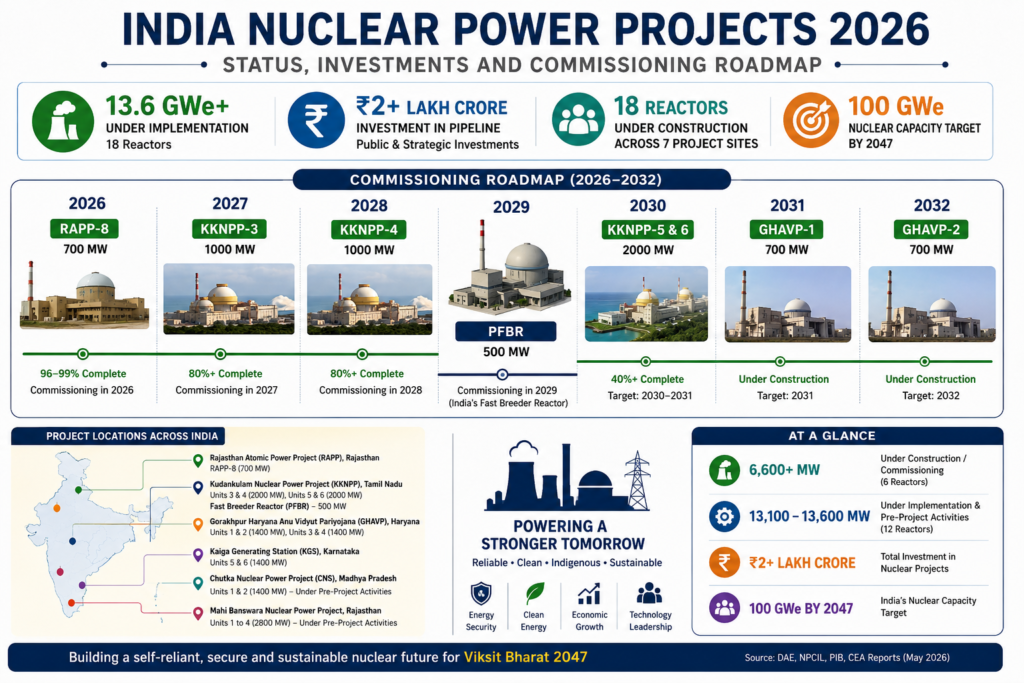
- Nuclear Commissioning Timeline (2026–2032)
The update provides a comprehensive snapshot of ongoing projects, revised commissioning schedules, project costs, financing support, and the challenges affecting execution. Together, these developments offer valuable insights into the current state of India’s nuclear construction programme.
India’s Nuclear Power Projects Under Construction
The current pipeline consists of three categories of reactors:
Indigenous Pressurised Heavy Water Reactors (PHWRs)
India’s indigenous 700 MW PHWR technology continues to be the backbone of the country’s nuclear expansion programme. Projects include:
| Project | Location | Capacity |
|---|---|---|
| RAPP-8 | Rajasthan | 700 MW |
| GHAVP-1 | Haryana | 700 MW |
| GHAVP-2 | Haryana | 700 MW |
| Kaiga-5 | Karnataka | 700 MW |
| Kaiga-6 | Karnataka | 700 MW |
Total PHWR Capacity: 3,500 MW
A major milestone was achieved when RAPP-7 entered commercial operation on 15 April 2026, becoming the latest addition to India’s operating nuclear fleet. Its twin unit, RAPP-8, is now in the advanced stage of commissioning and is expected to become operational during 2026.
Prototype Fast Breeder Reactor (PFBR)
| Project | Location | Capacity |
|---|---|---|
| PFBR | Kalpakkam, Tamil Nadu | 500 MW |
The PFBR is expected to be commissioned in March 2027.
Beyond its generating capacity, the project carries strategic importance as a key element of India’s long-term three-stage nuclear programme. The reactor represents decades of research, engineering, and technological development.
Kudankulam Nuclear Power Project Expansion Programme
India’s largest nuclear construction site remains Kudankulam in Tamil Nadu.
| Project | Capacity |
|---|---|
| KKNPP-3 | 1,000 MW |
| KKNPP-4 | 1,000 MW |
| KKNPP-5 | 1,000 MW |
| KKNPP-6 | 1,000 MW |
Total Capacity: 4,000 MW
These reactors are being developed with Russian cooperation and account for half of India’s current nuclear construction pipeline.
The expected commissioning schedule is:
- KKNPP-3: June 2027
- KKNPP-4: June 2028
- KKNPP-5: June 2029
- KKNPP-6: March 2030
Where India’s Nuclear Power Projects Are Being Built
State-wise Nuclear Capacity Under Construction
Tamil Nadu
4,500 MW
Haryana
1,400 MW
Karnataka
1,400 MW
Rajasthan
700 MW
Tamil Nadu alone accounts for more than half of the nuclear capacity currently under construction in India.
Why Some Nuclear Power Projects Have Been Delayed
The Department of Atomic Energy identified several factors affecting project schedules.
Post-Fukushima Design Changes
Following the Fukushima accident in Japan, additional safety enhancements were incorporated into reactor designs, resulting in increased engineering complexity and longer implementation timelines.
COVID-19 Disruptions
The pandemic affected workforce availability, construction activities, manufacturing schedules, and logistics across multiple projects.
Nuclear power projects: Supply Chain Challenges
Delays in the supply of critical nuclear equipment have impacted project execution.
International Geopolitical Developments
The Parliament update specifically mentions disruptions arising from:
- Russia-Ukraine conflict
- Regional geopolitical tensions
- Delays in supplies for Kudankulam projects
Site-Specific Issues
At the Gorakhpur project, difficult soil conditions required additional engineering attention and contributed to schedule revisions.
Costs Reflect the Scale of the Programme
Nuclear power projects involve significant capital investment.
Some of the major projects currently under construction include:
| Project | Revised Cost |
|---|---|
| RAPP-7 & 8 | ₹22,924 Crore |
| KKNPP-3 & 4 | ₹68,893 Crore |
| KKNPP-5 & 6 | ₹69,437 Crore |
Cost revisions for GHAVP, Kaiga, and PFBR are currently under review. While cost escalation remains a concern, many of the increases are linked to extended construction schedules, inflation, safety upgrades, and supply-chain disruptions.
Strong Government Support Continues
The Parliament data also highlights continued equity support for nuclear projects.
Funding has been allocated for:
- Ongoing reactor construction
- Future PHWR projects
- Kudankulam expansion
- PFBR completion
- New project development
This sustained financial commitment demonstrates the Government’s continued confidence in nuclear power as a strategic component of India’s energy future.
More Than Just Megawatts
The significance of the current construction programme extends beyond electricity generation.
The projects are helping build:
Industrial Capability
Indian manufacturers are gaining experience in producing nuclear-grade equipment and components.
Skilled Workforce
Thousands of engineers, technicians, and specialists are developing expertise in nuclear construction and operations.
Supply Chain Strength
Vendors and contractors are becoming part of an increasingly sophisticated nuclear ecosystem.
Project Execution Experience
Each completed reactor provides valuable lessons that can improve future deployment.
The Link to Mission 100 GWe
The 8,000 MW currently under construction represents an important step toward India’s long-term ambition of achieving 100 GWe of nuclear capacity by 2047.
However, it also highlights the scale of the challenge ahead.
Achieving that target will require:
- Additional project approvals
- Fleet deployment of standardized reactors
- Expanded manufacturing capacity
- Larger pools of skilled manpower
- Innovative financing mechanisms
- Efficient project execution
The reactors under construction today will help determine how effectively India can scale future deployments.
Nuclear Commissioning Timeline (2026–2032)
RAPP-8
PFBR
KKNPP-3
KKNPP-4
KKNPP-5
KKNPP-6
Kaiga-5
Kaiga-6
Looking Ahead : Together, these projects will add approximately 8,000 MW of clean, reliable baseload electricity to India’s power system.
Editorial Perspective
India’s nuclear construction programme is entering a decisive phase. The current pipeline demonstrates strong government commitment, technological maturity, and growing industrial capability. At the same time, it highlights the importance of timely execution, resilient supply chains, workforce development, and sustained investment. As the country moves toward its 2047 nuclear ambitions, the success of these projects will shape not only future capacity additions but also confidence in India’s ability to deliver nuclear energy at scale.