
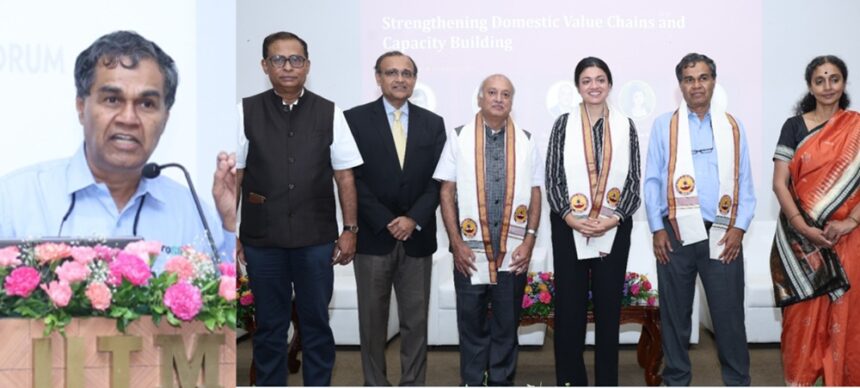
India’s nuclear expansion will require more than new reactors. It will also need a strong domestic supply chain, capable manufacturers and skilled professionals. Closer collaboration across the industry will be equally important. The role of micro, small and medium enterprises (MSMEs) in building these capabilities was a key theme at an international conference held at IIT Madras on 8 October 2026.
Dr S. Shamasundar, Honorary Director of India Nuclear Forum (INF) and Managing Director of ProSIM R&D Pvt Ltd, spoke at the conference titled “Building India’s Nuclear Ecosystem: Policy, Technology & Industry.” The event was organised by the Deccan Center for International Relations and IIT Madras.
MSMEs and Domestic Value Chains
Dr Shamasundar spoke during a session titled “Strengthening Domestic Value Chains and Capacity Building.” He highlighted the role of MSMEs in strengthening India’s nuclear industry and building domestic industrial capabilities.
As India expands its nuclear energy programme, it will need a wider network of capable suppliers. MSMEs can contribute through engineering, manufacturing, specialised services and other industrial solutions. However, their participation will depend on meeting the applicable nuclear quality standards and qualification requirements.
Building a strong domestic supply chain will also require closer collaboration between established nuclear organisations and emerging industry players. This can help address supply-chain gaps and improve the industry’s ability to support future nuclear projects.
India Nuclear Forum’s Role in Industry Collaboration
During the session, Dr Shamasundar outlined the initiatives of India Nuclear Forum (INF) to strengthen India’s nuclear energy ecosystem and support the country’s nuclear mission.
INF connects stakeholders across the nuclear sector through industry engagement, knowledge sharing and networking. These activities can help companies understand industry requirements, identify business opportunities and build relationships across the supply chain.
As India’s nuclear sector grows, such platforms can play an important role in bringing manufacturers, technology providers, engineering companies and other stakeholders closer together. This collaboration can support a more coordinated and capable industrial ecosystem.
ProSIM’s Role in Bridging Industry Gaps
Dr Shamasundar also highlighted ProSIM’s role in connecting different participants in the nuclear industry. The company aims to provide a seamless interface between research and development (R&D) organisations, nuclear plant operators, engineering, procurement and construction (EPC) companies, system integrators, vendors and regulators.
Each of these groups performs a distinct role in the nuclear ecosystem. However, their activities are closely connected. Better coordination can help bridge the gaps between technology development, engineering, industrial implementation and operational requirements. This interface is particularly important as India seeks to strengthen domestic capabilities and bring more qualified suppliers into the nuclear supply chain.
Senior Nuclear Industry Leaders Participate
The conference brought together senior professionals from India’s nuclear energy sector, industry representatives and other experts. Speakers included Dr Anil Kakodkar and Dr K. N. Vyas, former Chairmen of the Atomic Energy Commission; Dr S. S. Bajaj, former Chairman of the Atomic Energy Regulatory Board (AERB); Anil Parab of Larsen & Toubro (L&T); and S. K. Datir, Executive Director of the Nuclear Power Corporation of India Limited (NPCIL).
Other distinguished participants included S. C. Chetal and Dr B. VenkatRaman, former Directors of the Indira Gandhi Centre for Atomic Research (IGCAR). Dr Kallol Roy and Smt Rajani Sankaran, former Chairmen and Managing Directors of Bharatiya Nabhikiya Vidyut Nigam Limited (BHAVINI), also participated. Their presence reflected the depth of expertise involved in discussions on nuclear technology, industrial development and institutional capabilities in India.
Dr Shamasundar Felicitated at the Conference
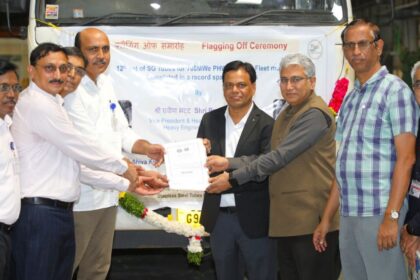
Dr Shamasundar was felicitated at the event by Ambassador Tirumurthy, former Permanent Representative of India to the United Nations and Chair of the Deccan Center for International Relations, and Smt Rajani Sankaran, former CMD of BHAVINI and former Accountant General of Tamil Nadu. The conference highlighted an important aspect of India’s nuclear ambitions: the need to build strong industrial capabilities alongside new nuclear capacity.
As the sector expands, capable domestic suppliers will become increasingly important. Greater participation by qualified MSMEs and closer coordination between research organisations, engineering companies and industry can help strengthen India’s nuclear supply chain and build a more resilient nuclear ecosystem.