
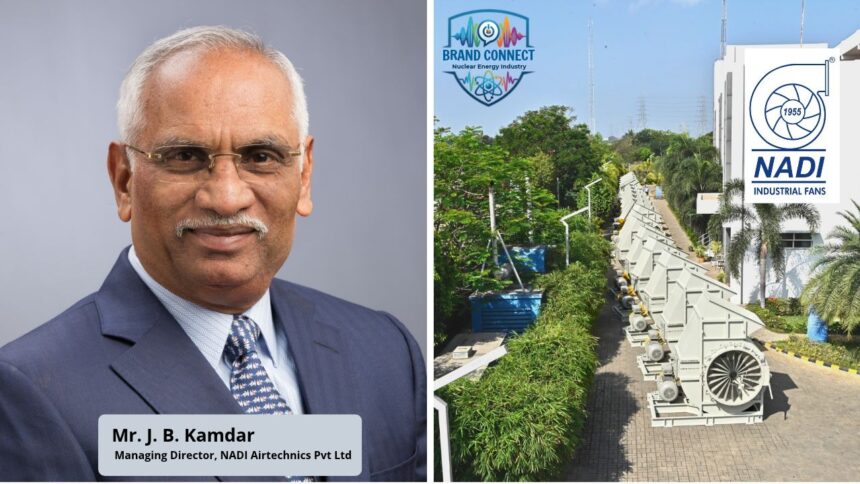
India’s nuclear expansion is creating new demands on specialised engineering suppliers (Nuclear Supply Chain). In this Q&A with Nuclear .IN Magazine, J. B. Kamdar, Managing Director, NADI Airtechnics Pvt Ltd, a Systemair Company, discusses supplier qualification, quality assurance, MSME participation and the capabilities Indian manufacturers need to strengthen their position in the domestic and global nuclear markets.
1. India’s nuclear programme is entering a major expansion phase. What does this mean for specialised engineering suppliers such as NADI Airtechnics?
The expansion presents both an opportunity and a responsibility. Scaling India’s nuclear capacity from under 9 GW towards 100 GW by 2047 will require repeatability, reliability construction and suppliers capable of delivering consistent quality at scale.
Having supplied fans to nuclear power plants at Tarapur, Kaiga, Kota, Narora, Kalpakkam, Kudankulam and Kakrapar, NADI understands the demanding requirements of this sector. For specialised engineering suppliers, the opportunity lies in early design involvement, indigenous engineering capabilities and long-term lifecycle support.
2. What are the key strengths of India’s existing nuclear supply chain, and where are the most important gaps?
India has developed strong indigenous engineering, manufacturing and project execution capabilities, supported by experienced public-sector organisations, research institutions and established industrial suppliers. This foundation provides a valuable platform for the next phase of nuclear expansion.
The key gaps are in expanding the qualified vendor base based on technical capabilities, strengthening specialised testing infrastructure, developing skilled manpower and improving supply-chain capacity for large, simultaneous projects. Greater standardisation, predictable procurement schedules and closer collaboration between design agencies, utilities and manufacturers will help address these gaps while maintaining stringent safety and quality requirements.
3. What should companies do to become nuclear-ready, particularly in terms of qualification, quality assurance, certification and documentation?
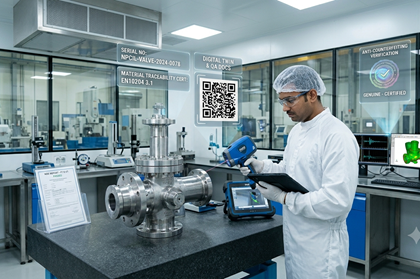
In the nuclear industry, safety and quality are sacrosanct. Certifications such as ISO 9001, ISO 14001 and ISO 45001 provide a foundation, but nuclear-sector requirements go further. These may include customer audits to the manufacturers plants, witnessed performance tests, proven past record of supplies to the nuclear industry, controlled manufacturing processes and complete traceability from raw material procurement to dispatch, as specified in the contract.
Documentation must be treated as an integral part of the product. Companies should engage early with design agencies and customers, understanding QAP, applicable codes and qualification requirements and build a verifiable performance record. Developing capabilities progressively, while meeting the prescribed requirements at every stage, is essential before undertaking more safety-critical applications.
4. How can India bring more MSMEs and specialised engineering companies into the nuclear supply chain without compromising safety and quality?
India can encourage greater participation from MSMEs and specialised engineering companies in the nuclear supply chain by addressing gaps in contractual terms and updating tender specifications to reflect current technologies and innovations. These measures can create a more conducive environment for their participation.
A more balanced technical and commercial evaluation framework, moving beyond a price-dominated L1 approach towards a more comprehensive assessment of technical competence and commercial value, would help recognise engineering expertise, product quality, lifecycle costs, and long-term reliability alongside price. Timely milestone payments, particularly given the long project timelines, streamlined approvals, and stronger coordination across the nuclear ecosystem would further encourage MSME participation.
However, expanding participation must never mean relaxing safety requirements. MSMEs must also ensure strict compliance with established standards, appropriate verification procedures, and continuous performance monitoring. These measures are essential to building a broader, more capable domestic supply chain without compromising reliability or safety.
5. With increasing private-sector participation and international collaboration, how can Indian suppliers become globally competitive?
During our journey, we have learned that partnering with global leaders, earning international certifications and serving demanding export markets taught us Indian suppliers must compete through engineering competence, dependable delivery and lifecycle reliability rather than price alone.
Investment in advanced manufacturing, testing infrastructure, technical skills and quality systems will be critical. Indian suppliers should benchmark against international codes, meet customer-specific qualification requirements and look beyond domestic projects. A proven record on India’s own plants will be the strongest calling card.
6. What key changes are required to build a resilient, reliable and globally competitive nuclear supply chain for India’s next phase of growth?
India needs long-term project visibility, stronger domestic supplier development and closer collaboration across the nuclear ecosystem.
SHANTI Act, 2025 marks a significant step in India’s nuclear sector. For greater private-sector participation, clear guidelines on supplier liability, contractual recourse and insurance are essential to build industry confidence. A transparent and balanced liability framework will encourage long-term investment in indigenous manufacturing and technology while ensuring the highest standards of nuclear safety and accountability.
7. Are there any other relevant points, experiences or recommendations you would like to highlight regarding India’s nuclear supply chain and its future growth?
Nuclear supply-chain development must prioritise reliability throughout the equipment lifecycle, from engineering and manufacturing to testing and service.
Our experience across India’s nuclear power plants has taught us that suppliers must be ready for rigorous audits, relevant qualification cycles and lifetime accountability. India’s nuclear expansion is an opportunity to strengthen not only our energy security but also our manufacturing capabilities, technical expertise and global reputation. By combining indigenous innovation with uncompromising quality and collective responsibility, Indian industry can support the nation’s growth and keep our Indian flag flying high on the global stage.