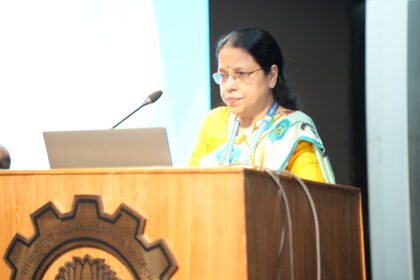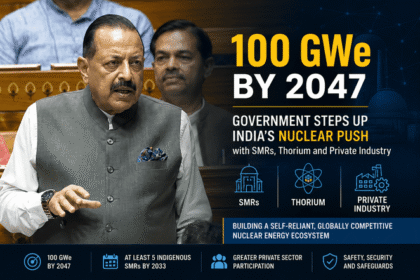


Mumbai: SHANTI Act could create new opportunities for private investment, industry participation and technology development in India’s nuclear energy sector, according to Dr. Anil Kakodkar, former Chairman of the Atomic Energy Commission of India.
Addressing the inaugural session of INSAC-2026 (October 29) in Mumbai, Dr. Kakodkar highlighted the importance of the legislation in supporting India’s ambitious 100 GWe nuclear energy mission. He emphasised that achieving this target would require more than government investment and institutional participation. Instead, India would need to bring a wider range of stakeholders into the nuclear ecosystem. “The SHANTI Act has come in very timely,” Kakodkar said, underlining the importance of mobilising additional financial resources and expanding participation in the sector.
SHANTI Act: Private Capital to Support Nuclear Expansion
Dr. Anil Kakodkar pointed out that India’s nuclear expansion would require substantial financial resources. Given the scale of the 100 GWe mission, government funding and existing institutional capabilities alone would not be sufficient to deliver the programme. In this context, he highlighted the importance of private capital and the wider participation enabled by the SHANTI Act.
Moreover, he noted that the legislation creates opportunities for more stakeholders to contribute to the country’s nuclear development programme. Alongside NPCIL, which he identified as the principal implementing organisation, public sector undertakings and private companies are expected to have a larger role in the expanding nuclear ecosystem. Consequently, the nuclear industry will have to prepare for a broader environment involving multiple organisations, technology providers and investors.
Opportunities Beyond Conventional Nuclear Power
Importantly, Kakodkar highlighted that the opportunities associated with the SHANTI Act extend beyond the construction of conventional nuclear power reactors. He pointed to the scope for research and development, as well as activities involving large reactors, small reactors and microreactors. These areas could open new avenues for technology development and innovation within India’s nuclear sector. Furthermore, he noted that the legislation also provides for activities related to fusion reactors, an emerging area of nuclear research where practical commercial applications remain a technological challenge. These provisions, as highlighted in his address, indicate the expanding range of activities that could attract interest from research organisations, technology developers and emerging companies.
SHANTI Act : Startups and Nuclear Technology Development
Dr. Kakodkar also drew attention to the growing enthusiasm among entrepreneurs and startups in India’s nuclear sector. He observed that several startups had already emerged, reflecting increasing interest in nuclear technology and its potential applications. With opportunities extending to research, development and different reactor technologies, the sector could see participation from companies beyond the traditional nuclear power establishment. However, he stressed that creating opportunities through legislation was only one part of the process. The responsibility for translating these opportunities into tangible outcomes would rest with the wider nuclear community, including government organisations and private industry.
A Wider Nuclear Industry Ecosystem
Kakodkar’s address highlighted a significant aspect of India’s nuclear expansion: the need to involve more stakeholders in delivering the 100 GWe mission. While NPCIL will continue to play a central role, the participation of PSUs, private companies, startups and research organisations will be important in expanding the country’s nuclear capabilities. Therefore, the next phase will require coordinated efforts across the nuclear ecosystem to translate policy opportunities into investment, technology development and industrial activity.
Concluding his observations on the SHANTI Act, Kakodkar called on the nuclear community, both in government and the private sector, to take responsibility for delivering India’s nuclear energy ambitions. His message at INSAC-2026 was clear: the expansion of India’s nuclear sector will require a broader base of investment, innovation and industry participation.