
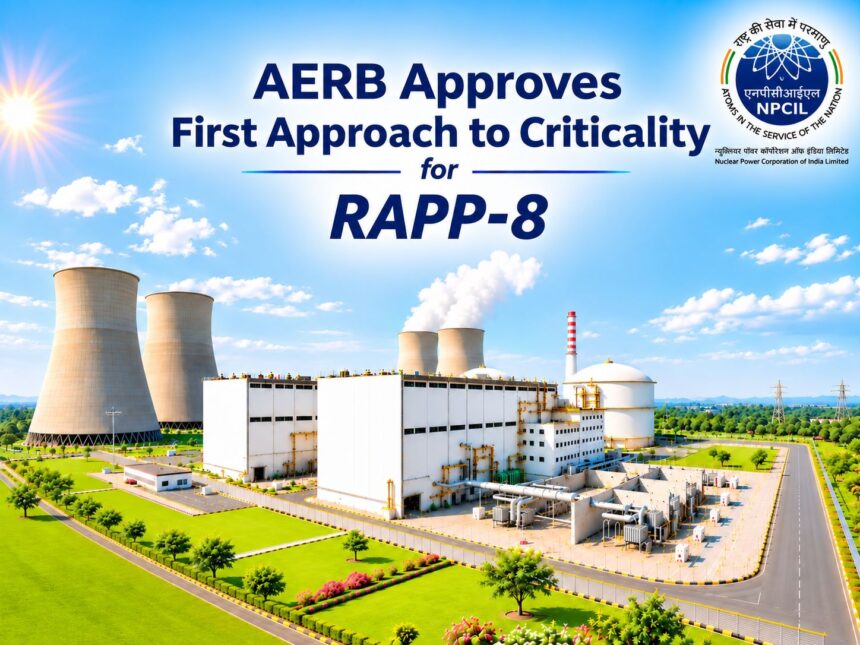
RAPP-8: Regulatory clearance marks a key commissioning milestone for India’s fourth indigenously designed 700 MWe PHWR of this series.
Bengaluru, 22 November 2026: Atomic Energy Regulatory Board (AERB), India’s nuclear safety regulator, has granted permission for the First Approach to Criticality (FAC) of Rajasthan Atomic Power Project Unit-8 (RAPP-8) on November 19, 2026. The approval follows the satisfactory completion of the requisite safety reviews. Located at the Rawatbhata Nuclear Power Plant site in Chittorgarh district, Rajasthan, RAPP-8 is a 700 MWe indigenous Pressurised Heavy Water Reactor (PHWR). It is the fourth unit in India’s indigenously designed and constructed 700 MWe PHWR series.
According to the official announcement by the Press Information Bureau (PIB), AERB’s approval followed a comprehensive safety review covering the reactor’s design, construction, commissioning test results and operational preparedness. The regulatory review included detailed assessments by AERB and its safety review committees, supported by regulatory inspections and deliberations by the AERB Board.
RAPP-8: An Important Commissioning Milestone
The permission for the First Approach to Criticality marks an important stage in the commissioning of RAPP-8. It paves the way for subsequent commissioning phases, leading towards commercial electricity generation, subject to the satisfactory completion of prescribed tests and receipt of the necessary regulatory permissions. AERB will continue its regulatory oversight during the subsequent commissioning activities. This will include safety reviews, regulatory inspections and monitoring through its resident site observer team.
Expanding India’s Indigenous 700 MWe PHWR Fleet
RAPP-8 is the fourth reactor of India’s indigenous 700 MWe PHWR design. The other three units of this series are Kakrapar Atomic Power Station Units 3 and 4 in Gujarat and Rajasthan Atomic Power Project Unit-7. The Rawatbhata site currently hosts eight nuclear power plant units. The progress of RAPP-8 represents another step in India’s efforts to expand its indigenous nuclear power generation capacity and strengthen domestic reactor technology capabilities. The development also supports India’s broader ambition to increase nuclear power’s contribution to the country’s long-term electricity mix.
Source: Press Information Bureau (PIB), Mumbai | November 20, 2026