
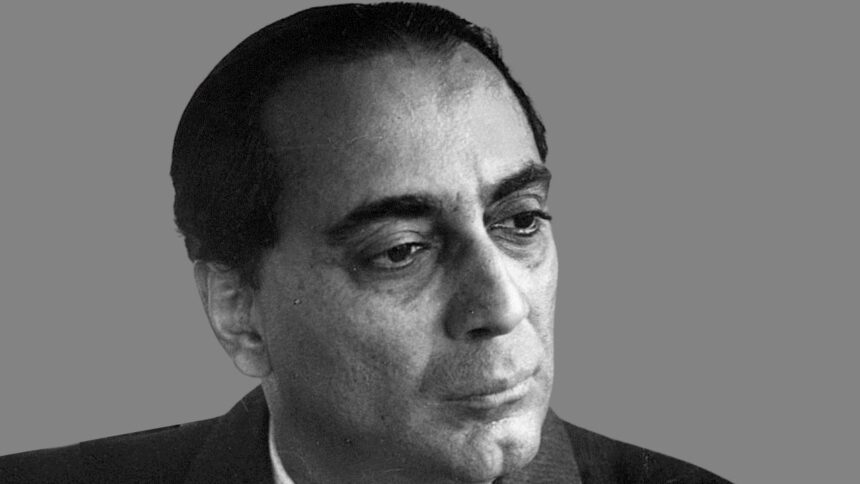
Dr. Homi Jehangir Bhabha (Homi J. Bhabha) (1909–1966) laid the foundations of India’s nuclear energy programme. His vision for scientific research, indigenous technology and skilled human resources continues to influence India’s nuclear development.
- Homi J. Bhabha : Building India’s Nuclear Science Institutions
- Homi J. Bhabha: A Vision for Indigenous Nuclear Technology
- Homi J. Bhabha: Developing India’s Nuclear Talent
- Homi J. Bhabha: From Scientific Vision to Industrial Capability
- Homi J. Bhabha: A Legacy That Continues
- Homi J. Bhabha: Building India’s Nuclear Science Institutions
- Homi J. Bhabha: A Vision for Indigenous Nuclear Technology
- Developing India’s Nuclear Talent
- Homi J. Bhabha: From Scientific Vision to Industrial Capability
- A Legacy That Continues
- Homi J. Bhabha : Historical Timeline
India’s nuclear energy journey began with a vision that extended far beyond electricity generation. Dr. Homi Jehangir Bhabha (Homi J. Bhabha) believed that scientific research, technological capability and skilled people were essential to building a self-reliant nation. Born on 30 October 1909 in Bombay, now Mumbai, Bhabha became one of India’s most influential scientists. While his contributions to theoretical physics earned him international recognition, his institution-building efforts helped shape the country’s long-term nuclear ambitions. Today, as India works towards its ambition of achieving 100 GWe of nuclear power capacity by 2047, Bhabha’s emphasis on indigenous scientific and technological capabilities remains highly relevant.
Homi J. Bhabha : Building India’s Nuclear Science Institutions
Homi J. Bhabha understood that a successful nuclear program required much more than scientific discoveries. India needed dedicated research institutions, trained scientists, advanced laboratories and the ability to develop complex technologies.
With this vision, he established the Tata Institute of Fundamental Research (TIFR) in Mumbai in 1945. The institute subsequently became a leading centre for advanced research in mathematics, physics and other scientific disciplines. Three years later, in 1948, Bhabha became the first Chairman of India’s Atomic Energy Commission. In this role, he helped guide the country’s emerging atomic energy programme.
His institution-building efforts continued in January 1954, when the Atomic Energy Establishment, Trombay (AEET), was established to support the multidisciplinary research required for nuclear development. Following his death in 1966, AEET was renamed the Bhabha Atomic Research Centre (BARC) in his honour. Together, these institutions helped establish the scientific and organisational foundations on which India’s nuclear research and development capabilities grew.
Homi J. Bhabha: A Vision for Indigenous Nuclear Technology
Beyond establishing research institutions, Homi J. Bhabha recognised that long-term nuclear development required domestic expertise and technological independence. His approach connected fundamental research with practical applications. Equally importantly, it emphasised developing skilled personnel who could design, operate and advance complex scientific systems. Over time, this vision helped create a framework for building capabilities across nuclear science, reactor technology, fuel-cycle research and associated industrial activities.
For India, indigenous capability was never simply about manufacturing equipment locally. It also required scientific knowledge, advanced research infrastructure, trained engineers and sustained investment in technology. These priorities continue to matter as India expands its nuclear power programme and seeks greater participation from domestic manufacturers and technology providers. Consequently, Bhabha’s vision offers a valuable historical perspective on the country’s continuing pursuit of technological self-reliance.
Homi J. Bhabha: Developing India’s Nuclear Talent
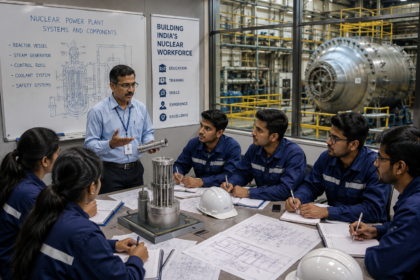
Alongside scientific research and technological development, Bhabha placed considerable importance on building a strong scientific workforce. The establishment of the BARC Training School reflected the need to prepare specialists for India’s expanding atomic energy programme. Through structured training, the programme helped develop the technical expertise required to support the country’s nuclear ambitions.
More broadly, Bhabha’s approach connected scientific education, research and national development. He recognised that India needed to develop its own pool of experts rather than depend indefinitely on overseas capabilities. This emphasis on human resources remains important today. Nuclear expansion requires qualified scientists, nuclear engineers, manufacturing specialists, quality-assurance professionals and skilled technicians.
Therefore, training and retaining this workforce will be essential as India develops new nuclear projects, strengthens its domestic supply chain and expands its industrial capabilities.
Homi J. Bhabha: From Scientific Vision to Industrial Capability
Homi J. Bhabha’s legacy also offers an important perspective for India’s nuclear industry, particularly as the country prepares for a larger nuclear energy programme. Nuclear power plants depend on an extensive industrial ecosystem. This includes nuclear-grade materials, specialised components, precision manufacturing, instrumentation and control systems, fuel-cycle facilities, engineering services and rigorous quality assurance. Developing such an ecosystem requires sustained collaboration between research institutions, public-sector organisations, private companies and academic institutions.
However, scientific expertise alone cannot guarantee successful nuclear expansion. India must also translate its research capabilities into reliable industrial capacity. Manufacturers need to meet demanding technical requirements, demonstrate quality and traceability, and deliver components that satisfy applicable nuclear-sector standards.
At the same time, suppliers must develop the skills, infrastructure and quality-management systems needed to meet the sector’s stringent requirements. In this context, Bhabha’s institution-building approach provides a valuable historical reference. Strong research institutions and skilled people remain essential to developing technologies and industrial capabilities suited to India’s needs.
Homi J. Bhabha: A Legacy That Continues
Dr. Homi Jehangir Bhabha died on 24 January 1966 in an aircraft accident near Mont Blanc, France. He was 56. His contributions to theoretical physics remain part of the international scientific record. Equally significant is his influence on the development of India’s nuclear programme.
The institutions he helped establish created a foundation for decades of research, training and technological development. Moreover, his vision demonstrated the importance of long-term planning in a field where scientific progress and industrial capability develop over many years. Since Bhabha’s time, India’s nuclear programme has evolved considerably. Looking ahead, its continued development will depend on new technologies, investment, capable institutions and a broader industrial base. Nevertheless, one principle remains central to his legacy: a country must invest in knowledge and develop its own capabilities to sustain technological progress.
As India advances towards its 2047 nuclear ambition, that principle remains as relevant as ever. India’s nuclear energy journey began with a vision that extended far beyond electricity generation. Dr. Homi Jehangir Bhabha believed that scientific research, technological capability and skilled people were essential to building a self-reliant nation. Born on 30 October 1909 in Bombay, now Mumbai, Bhabha became one of India’s most influential scientists. His contributions to theoretical physics earned international recognition. His institution-building efforts, however, helped shape the country’s long-term nuclear ambitions. Today, as India works towards its ambition of achieving 100 GWe of nuclear power capacity by 2047, Bhabha’s emphasis on indigenous scientific and technological capabilities remains relevant.
Homi J. Bhabha: Building India’s Nuclear Science Institutions
Homi J. Bhabha understood that a successful nuclear programme required more than scientific discoveries. India needed research institutions, trained scientists, advanced laboratories and the ability to develop complex technologies.
In 1945, he established the Tata Institute of Fundamental Research (TIFR) in Mumbai. The institute became a centre for advanced research in mathematics, physics and other scientific disciplines. In 1948, Bhabha became the first Chairman of India’s Atomic Energy Commission. He subsequently led the development of the country’s atomic energy programme.
In January 1954, he established the Atomic Energy Establishment, Trombay (AEET), to support the multidisciplinary research needed for nuclear development. Following his death in 1966, the establishment was renamed the Bhabha Atomic Research Centre (BARC) in his honour. These institutions helped create the scientific foundation on which India’s nuclear research and development capabilities grew.
Homi J. Bhabha: A Vision for Indigenous Nuclear Technology
Homi J. Bhabha recognised that long-term nuclear development required domestic expertise and technological independence. His approach linked fundamental research with practical applications. It also emphasised the development of skilled personnel who could design, operate and advance complex scientific systems. This vision helped establish a framework for developing capabilities across nuclear science, reactor technology, fuel-cycle research and associated industrial activities.
For India, indigenous capability was not simply a matter of manufacturing equipment locally. It required scientific knowledge, research infrastructure, trained engineers and sustained investment in technology. These priorities continue to matter as India expands its nuclear power programme and seeks greater participation from domestic manufacturers and technology providers.
Developing India’s Nuclear Talent
Homi J. Bhabha placed considerable importance on building a strong scientific workforce. The establishment of the BARC Training School reflected the need to prepare specialists for India’s expanding atomic energy programme. His broader approach connected scientific education, research and national development. He believed India needed to develop its own pool of experts rather than depend indefinitely on overseas capabilities.
This emphasis on human resources remains important today. Nuclear expansion requires qualified scientists, nuclear engineers, manufacturing specialists, quality-assurance professionals and skilled technicians. Training and retaining this workforce will be essential as India develops new nuclear projects and strengthens its domestic supply chain.
Homi J. Bhabha: From Scientific Vision to Industrial Capability
Homi J. Bhabha’s legacy also offers an important perspective for India’s nuclear industry. Nuclear power plants depend on an extensive industrial ecosystem. It includes nuclear-grade materials, specialised components, precision manufacturing, instrumentation and control systems, fuel-cycle facilities, engineering services and rigorous quality assurance. Building this ecosystem requires sustained collaboration between research institutions, public-sector organisations, private companies and academic institutions.
As India pursues its nuclear expansion plans, the challenge is to translate scientific capability into reliable industrial capacity. Manufacturers must meet demanding technical requirements, demonstrate quality and traceability, and deliver components that satisfy nuclear-sector standards. Bhabha’s institution-building approach provides a useful historical reference for this effort. Strong research institutions and skilled people remain essential to developing technologies and industrial capabilities suited to India’s needs.
A Legacy That Continues
Dr. Homi Jehangir Bhabha died on 24 January 1966 in an aircraft accident near Mont Blanc, France. He was 56.
His contributions to theoretical physics remain part of the international scientific record. His influence on India’s nuclear program is equally significant. The institutions he established helped create a foundation for decades of research, training and technological development. His vision also demonstrated the importance of long-term planning in a field where scientific progress and industrial capability develop over many years.
India’s nuclear program has evolved considerably since Bhabha’s time. Its future will depend on new technologies, investment, capable institutions and a broader industrial base. Yet one principle remains central to his legacy: a country must invest in knowledge and develop its own capabilities to sustain technological progress. As India advances towards its 2047 nuclear ambition, that principle remains as relevant as ever.
Homi J. Bhabha : Historical Timeline
| Year | Milestone |
|---|---|
| 1909 | Homi J. Bhabha was born in Bombay. |
| 1945 | He established TIFR. |
| 1948 | He became the first Chairman of the Atomic Energy Commission. |
| 1954 | He established the Atomic Energy Establishment, Trombay. |
| 1966 | He died in an aircraft accident near Mont Blanc; AEET was subsequently renamed BARC in his honour. |