
India–Bulgaria MoU focuses on nuclear industry partnerships especially nuclear technology exchange, workforce development, supplier partnerships, B2B engagement and international supply chain opportunities.
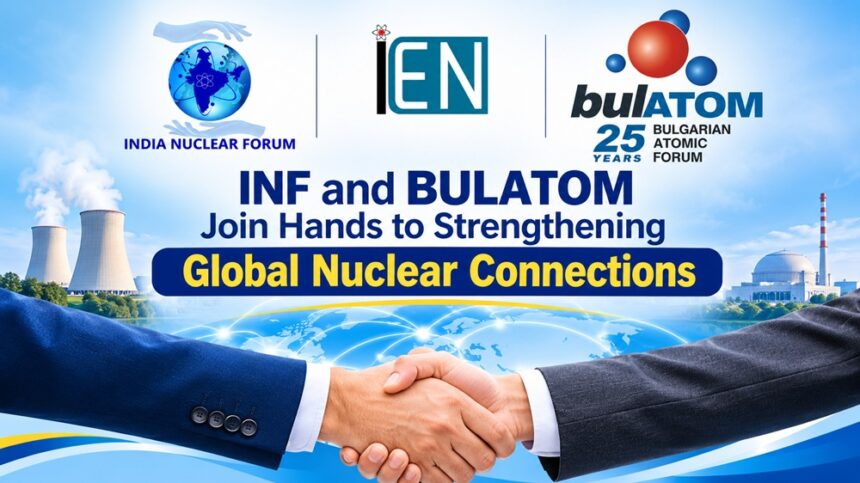
India Nuclear Forum (INF) and BULATOM, the Bulgarian Atomic Forum, have signed a Memorandum of Understanding (MoU) to establish a framework for long-term cooperation between the nuclear industries of India and Bulgaria.
The MoU was signed on 15 September 2026 by Mr. Bogomil Manchev, Chairman of the Managing Board of BULATOM, and Shamasundar, Honorary Director of India Nuclear Forum – an initiative of India Energy Network. The MoU aims to strengthen institutional and industrial connections between the two countries through technical knowledge exchange, human capital development, business partnerships and international cooperation.
The partnership comes at a time when both countries are pursuing new nuclear energy development programmes. Bulgaria is preparing for two new AP1000 reactor units at the Kozloduy Nuclear Power Plant, while India is creating new opportunities for private-sector participation and international supplier engagement under its evolving nuclear policy framework.
A Framework for Long-Term Industry Cooperation
According to BULATOM’s official announcement, INF is a non-governmental industry association that serves as a common platform for Indian nuclear industries, institutions and experts. Its activities include promoting information exchange on nuclear technology, supporting the safe and peaceful development of nuclear power in India, and fostering international cooperation with counterpart organisations.
The MoU establishes several areas of cooperation between the two organisations.
1. Nuclear Technology and Knowledge Exchange: Both organisations will encourage the exchange of information, technical expertise and best practices relating to the safe and peaceful use of nuclear technologies. The collaboration will also support greater interaction between experts and industry stakeholders.
2. Human Capital Development: Workforce development is an important area of cooperation. The two associations will explore opportunities to exchange experience and expertise in preparing skilled professionals to support nuclear construction, operations and the wider nuclear industry.
3. Business Partnerships and Supplier Collaboration: A major objective is to connect Indian and Bulgarian nuclear companies and explore opportunities for industrial collaboration. The organisations will encourage B2B interactions, business meetings and industrial visits to manufacturing facilities. Supplier engagement will also cover opportunities involving non-safety-class equipment and components.
4. International Supply Chain Development: The partnership will explore opportunities to expand nuclear industry supply chains and identify potential joint projects in Bulgaria, India and third-country markets.
5. Conferences, Events and Public Communication: The MoU provides for mutual participation in conferences, business forums and industry events. BULATOM will also share its experience in public communication and nuclear outreach with India’s nuclear industry community. Both organisations intend to review potential areas of collaboration through quarterly interactions and identify practical opportunities for their members.
Connecting Two Nuclear Industry Communities
The partnership reflects a shared interest in connecting national nuclear industry capabilities with international opportunities. Bulgaria’s plans for two new AP1000 units at Kozloduy create potential areas of engagement for suppliers, manufacturers, engineering companies and service providers. At the same time, India’s expanding nuclear ambitions and the opening of new avenues for industry participation are creating opportunities for international technology providers and suppliers.
For Indian companies, engagement with the Bulgarian nuclear industry could provide access to international networks, manufacturing partnerships and potential business opportunities. Bulgarian companies, in turn, can explore India’s growing nuclear supply chain and industrial capabilities. The emphasis on B2B engagement is particularly relevant for small and medium-sized enterprises, engineering companies and manufacturers seeking to participate in international nuclear projects.
Two Important Engagement Platforms in 2027
The cooperation will receive further momentum through two industry events scheduled for 2027.
BULATOM Annual Conference | 2–4 June 2027: BULATOM will host its annual conference on Bulgaria’s Black Sea coast. India Nuclear Forum will support international outreach by promoting the event through Nuclear .IN Magazine and its industry communication platforms.
India Nuclear Energy Forum (INEF 2027) | 23–25 September 2027: The major engagement platform – flagship event of India Energy Network will be INEF 2027, scheduled at Mumbai. The event will bring together Indian and international stakeholders to discuss nuclear technology, industry development, supply-chain partnerships, investment and opportunities for collaboration. These two events will provide opportunities for members of both organisations to interact, exchange information and explore potential business relationships.
Building an International Nuclear Energy Ecosystem
Commenting on the partnership, Dr. S. Shamasundar, Honorary Director of India Nuclear Forum, said: “We are trying to create a nuclear energy ecosystem consisting of Indian players and overseas players, and we want to facilitate business-to-business transactions, technology and information sharing.”
BULATOM has described the signing as an important step towards strengthening international cooperation in the nuclear sector and creating new opportunities for industrial, technological and expert collaboration between Bulgaria and India.
For India Nuclear Forum, the agreement represents another step towards building international connections for India’s nuclear industry and facilitating engagement between domestic and overseas stakeholders. As nuclear programmes expand across different markets, collaboration between industry associations can help bridge the gap between technology capabilities, qualified suppliers, skilled professionals and business opportunities.