
New Delhi, 11 October 2026: Nuclear Power Corporation of India Limited (NPCIL) has strengthened its radiological monitoring capabilities with the induction of Mobile Radiological Assessment Laboratories (MRALs). Equipped with advanced radiation monitoring technologies, these mobile units are designed to support radiation assessment and emergency response across the country.
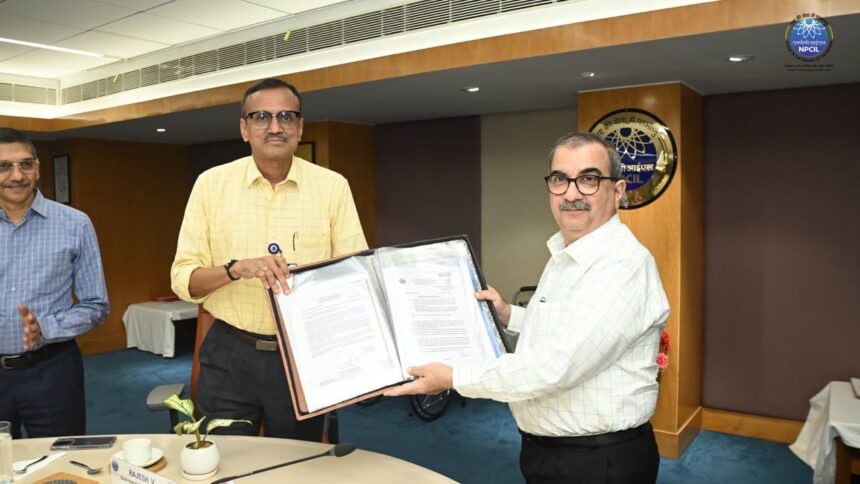
Developed by RSSD, BRAC, BARC, the MRALs were handed over to Shri Rajesh Veeraraghavan, Chairman and Managing Director of NPCIL, by Shri Vivek Bhasin, Director of BARC. The handover ceremony took place at Nabikiya Urja Bhavan, NPCIL.
Senior officials from NPCIL, BARC, the Atomic Energy Regulatory Board (AERB) and the Department of Atomic Energy (DAE) attended the event. Officials from various nuclear power plant sites also joined the programme through video conferencing.
Real-Time Radiation Monitoring
MRAL is a specialised mobile platform designed to conduct radiological monitoring and assessment. Its Integrated Radiation Instrumentation System (IRIS) combines multiple radiation detectors, data acquisition systems and computing capabilities.
This integrated system enables real-time radiation measurements, including while the vehicle is in motion. As a result, the laboratories can support radiation surveys across different locations and provide timely information for assessment.
Supporting Emergency Response
MRALs will further strengthen the Radiation Emergency Response Centers across the country. Their mobility and advanced monitoring capabilities will be particularly useful at remote locations, where timely access to radiological assessment facilities can be important during an emergency.
The induction marks another step in strengthening India’s radiological monitoring network. By combining mobility with real-time measurement capabilities, the MRALs are expected to support faster assessment and improve preparedness for radiological emergencies.
Related Reads| What Are MRALs? Mobile Radiological Assessment Laboratories: Explained