
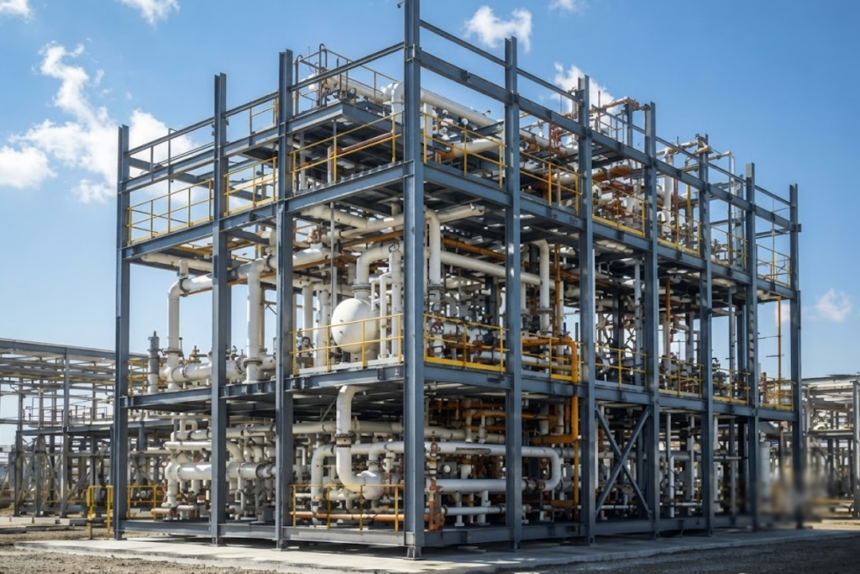
A Sodium Technology Complex (STC) is an important part of the engineering infrastructure associated with sodium-cooled nuclear reactor technology. It supports the development, testing, handling and integration of systems that use liquid sodium as a coolant. As India advances its nuclear energy program, including the development of fast breeder reactor technology, specialised facilities and engineering capabilities will play an important role. Sodium Technology Complex represents one such area where precision engineering, advanced materials, safety systems and multidisciplinary coordination come together.
What is a Sodium Technology Complex (STC)?
A Sodium Technology Complex is a specialised engineering and testing facility designed to support the development of sodium-cooled fast breeder reactors. It provides an environment where engineers and scientists can test reactor components, study sodium behaviour and validate new designs before their application in actual nuclear reactors.
In India, an important example is the Sodium Technology Complex established by the Indira Gandhi Centre for Atomic Research (IGCAR) at Kalpakkam, Tamil Nadu. Facility comes under IGCAR’s Fast Reactor Technology Group. Its purpose is to strengthen India’s indigenous capabilities in sodium technology and support the development of future fast breeder reactors.
Why do fast breeder reactors use liquid sodium?
To understand the importance of an STC, it is first necessary to understand the role of sodium in a fast breeder reactor. Most conventional nuclear power reactors use water as a coolant. However, fast breeder reactors use liquid sodium to transfer heat from the reactor core. Sodium offers several advantages:
- Excellent heat transfer: Liquid sodium can transfer large amounts of heat efficiently.
- High boiling point: Sodium has a boiling point of approximately 883°C. Therefore, it can operate at high temperatures without requiring the high pressure associated with water-cooled reactors.
- Fast neutron operation: Sodium does not significantly slow down fast neutrons. This makes it suitable for fast reactor designs.
- Efficient heat transport: Its thermal properties support efficient heat removal from the reactor core.
However, sodium also presents engineering challenges. It reacts strongly with water and can react with oxygen in the air. Therefore, its handling requires specialised equipment, leak detection, controlled environments and dedicated fire protection systems.
What happens inside a Sodium Technology Complex?
The STC provides specialised facilities to study and test sodium-based systems under controlled conditions.
Its major functions include:
1. Sodium handling and storage: Liquid sodium must be stored, transferred and handled under carefully controlled conditions. The complex includes dedicated storage systems and facilities for handling sodium safely.
2. Testing of reactor components: Components such as sodium pumps, valves, heat exchangers, shutdown mechanisms and other equipment need to perform reliably under high-temperature conditions. The STC provides facilities to evaluate their performance before they are considered for reactor applications.
3. Sodium circulation and purification: Sodium must maintain the required chemical quality during operation. Specialised systems circulate, heat and purify the liquid metal.
4. Instrumentation and monitoring: Engineers need accurate information about sodium temperature, flow, pressure and level. They also need to detect leaks and monitor operating conditions. Therefore, the complex integrates specialised sensors, measurement devices and control systems.
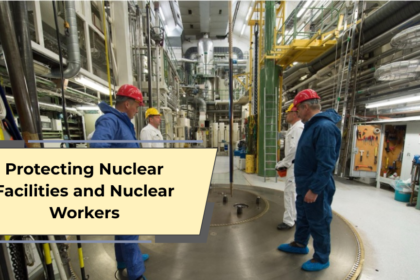
5. Safety and emergency management: Sodium-related risks require dedicated safety arrangements. These include leak detection, fire alarms, controlled sodium removal and systems for cleaning and disposal.
6. Research and design validation: The facility allows scientists and engineers to evaluate new designs and operating concepts. This helps identify technical challenges before components and systems are used in future fast breeder reactors.
Building India’s Indigenous Sodium Technology Capability
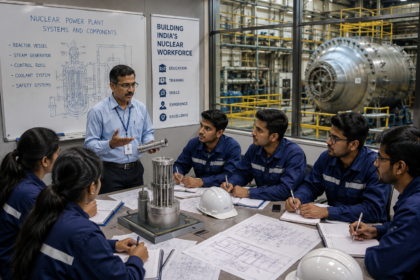
The Sodium Technology Complex is more than an experimental facility. It is an important part of India’s effort to develop advanced fast reactor technology. By providing specialised infrastructure for sodium handling, component testing, design validation and safety evaluation, the facility supports the development of future fast breeder reactors.
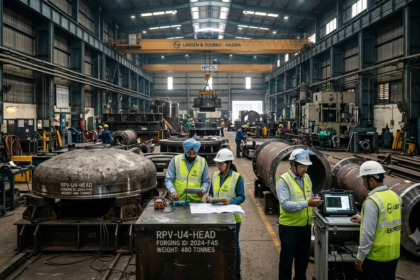
Equally important is its role in strengthening India’s industrial ecosystem. Greater participation by domestic engineering companies and manufacturers can help build a reliable supply chain for specialised nuclear equipment. As India advances its nuclear energy ambitions, facilities such as the STC will play an important role in developing the technologies, engineering capabilities and industrial expertise required for the next generation of nuclear reactors.
Source
https://www.igcar.gov.in/publications/igc_annual_report_2025.pdf
https://www.igcar.gov.in/igcarprofile.html
https://www.igcar.gov.in/frtg.html