By using this site, you agree to the Privacy Policy and Terms of Use.
Accept
Magazine Nuclear in
  • Home
  • News
  • Insights
  • Magazine
  • Interviews
  • Events
  • Advertise
  • Contact
Reading: Dr. Kakodkar Calls for Faster Progress on India’s Thorium Programme
SUBSCRIBE
Magazine Nuclear inMagazine Nuclear in
Font ResizerAa
  • Advertise
  • Insights
  • Magazine
  • Interviews
  • Events
Search
  • Home
  • News
  • Insights
  • Magazine
  • Interviews
  • Events
  • Advertise
  • Contact
Have an existing account? Sign In
Follow US
  • Home
  • Partnership
  • Editorial
  • Advertisement
Magazine Nuclear in > Blog > News > Dr. Kakodkar Calls for Faster Progress on India’s Thorium Programme
News

Dr. Kakodkar Calls for Faster Progress on India’s Thorium Programme

Editor - Nuclear.IN Magazine
Last updated: 5 November, 2026 11:01 am
Editor - Nuclear.IN Magazine
3 Min Read
Share
Kakodkar Calls for Faster Progress on India's Thorium Programme
SHARE

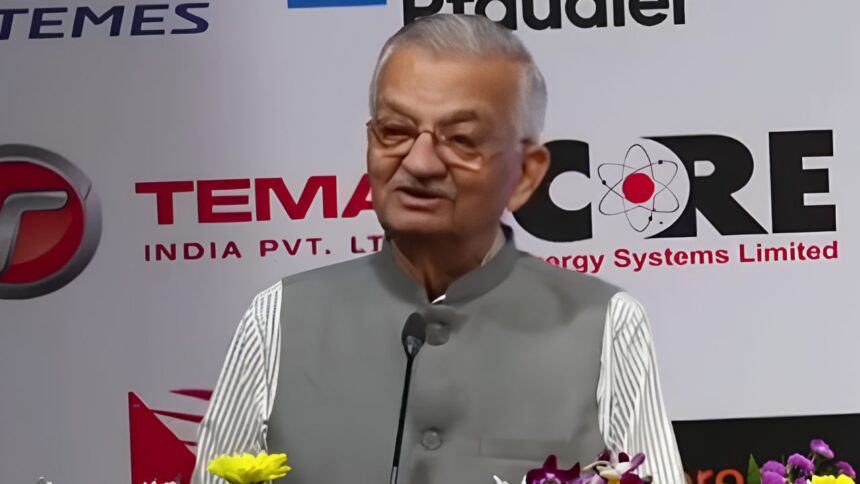
Mumbai: Dr. Anil Kakodkar, former Chairman of the Atomic Energy Commission, has called for renewed efforts to advance India’s thorium utilisation programme. He stressed that improved uranium availability should not weaken the country’s long-term commitment to thorium.

Contents
  • Thorium Remains Central to India’s Nuclear Strategy
  • Thorium Programme: Closed Fuel Cycle Is Key to Thorium Utilisation
  • Time to Accelerate the Thorium Programme

Speaking at the inaugural session of INSAC-2026 in Mumbai (October 29), Kakodkar highlighted the importance of India’s three-stage nuclear power programme and its closed fuel cycle strategy. He said the time had come to implement the actions needed to accelerate thorium utilisation.

Thorium Remains Central to India’s Nuclear Strategy

India has limited domestic uranium resources but substantial thorium reserves. This resource profile shaped the three-stage nuclear programme envisioned by Dr. Homi J. Bhabha. Dr Anil Kakodkar recalled that Bhabha had recognised the importance of building India’s long-term energy strategy around thorium. He also cautioned against becoming complacent following improvements in access to imported uranium. According to Kakodkar, securing uranium supplies through international cooperation should support—not replace—India’s ambition to develop a thorium-based fuel cycle.

Thorium Programme: Closed Fuel Cycle Is Key to Thorium Utilisation

India’s three-stage programme is based on a closed nuclear fuel cycle. It aims to progressively use domestic uranium, plutonium recovered from spent fuel and, eventually, thorium. The first stage uses natural uranium in Pressurised Heavy Water Reactors (PHWRs). The spent fuel from these reactors provides plutonium for the second stage, which uses Fast Breeder Reactors (FBRs).

In the third stage, thorium-232 will be converted into fissile uranium-233, which can then be used as reactor fuel. Dr. Kakodkar emphasised that thorium utilisation depends on recycling. Unlike conventional uranium fuel use, thorium cannot be deployed as a sustainable fuel source without the technologies needed to breed, recover and recycle uranium-233.

Time to Accelerate the Thorium Programme

Dr. Anil Kakodkar also recalled concerns expressed by former President Dr. A.P.J. Abdul Kalam that improved uranium supplies could cause India to lose focus on its thorium ambition. He said he had assured Kalam that access to uranium would instead help accelerate thorium utilisation. His message at INSAC-2026 was clear: India must continue its core three-stage programme while pursuing its larger nuclear energy ambitions. Advancing thorium technologies will remain important to the country’s long-term energy security and fuel sustainability. As India moves further into the second stage of its nuclear programme, developing the technologies and fuel-cycle capabilities required for thorium utilisation will be a critical part of the journey.


TAGGED:Anil KakodkarClosed Fuel CycleINSAC 2026Nuclear Fuel CycleThoriumThree-Stage Nuclear Programme
Share This Article
Facebook Whatsapp Whatsapp Email Copy Link Print
Previous Article Nuclear Power Ranbir Sharan Das, Director, Fairwood Nuclear Beyond 100 GWe: Expanding Nuclear Power into New Markets
Next Article inf-igeos-india-poland-nuclear-partnership INF and IGEOS Launch India–Poland Nuclear Partnership
Leave a Comment Leave a Comment

Leave a Reply Cancel reply

Your email address will not be published. Required fields are marked *

- Sponsored-
Ad image
0FollowersLike
InstagramFollow
YoutubeSubscribe
LinkedInFollow

You Might Also Like

300-metres-below-ground-inside-india-uranium-mining-story
NewsPublic Awareness

300 Metres Below Ground: Inside India’s Uranium Mining Story

Media delegation visits UCIL’s uranium mining & milling facilities at…

7 Min Read
india-5-indigenous-smrs-100-gwe-2047
Industry UpdatesNews

5 Indigenous SMRs by 2033, 100 GWe by 2047: What Industry Must Prepare For

India targets 5 indigenous SMRs by 2033 and 100 GWe…

5 Min Read
india-20-nuclear-reactors-under-implementation
NewsProject Developments

India Has 20 Nuclear Reactors Under Development, DAE Tells Parliament

India has 20 nuclear reactors under implementation, including 10 under…

3 Min Read
ece-students-nuclear-sector-careers-india- Mr N Rama Mohan
NewsPublic Awareness

Why Electronics Engineers Matter to India’s Nuclear Future

BNMIT students explore nuclear science, India’s 100 GWe ambition and…

5 Min Read
  • Quick Links
  • About Us
  • Advertise
  • Partnership
  • Terms of Use
  • Privacy Policy
  • Cookie Policy
  • Editorial Policy
Magazine Nuclear inMagazine Nuclear in
Follow US
Join Us!
Subscribe to our newsletter and never miss our latest news, podcasts etc.. Subscribe
Zero spam, Unsubscribe at any time.
Welcome Back!

Sign in to your account

Username or Email Address
Password

Lost your password?